Calming an Anxious Dog: Proven Strategies for a Happier, More Relaxed Pet
The sound of paws frantically pacing across hardwood floors, the soulful whimper during a thunderstorm, or the sight of a shredded sofa after you’ve been gone for just twenty minutes—canine anxiety is a heartbreaking reality for millions of pet owners. If you’ve ever looked into your dog’s eyes and felt their sheer panic, you know that anxiety isn’t just a “behavioral quirk.” It is a physiological state of distress that affects a dog’s quality of life and the harmony of your home.
Anxiety in dogs is one of the most common reasons pet owners seek professional help. Yet, many people feel overwhelmed by the conflicting advice found online. Is it separation anxiety? Is it a noise phobia? Should you use treats, or does that “reward” the fear?
This comprehensive guide dives deep into the science of canine stress and provides actionable, expert-backed strategies to help your furry friend find their inner peace. From immediate “triage” techniques to long-term behavioral modification, here is everything you need to know about calming an anxious dog.
1. Decoding the Language of Fear: Recognizing the Signs of Anxiety
Before you can fix the problem, you have to identify it. Dogs can’t tell us they’re feeling overwhelmed with words, so they use their bodies. Unfortunately, many signs of anxiety are subtle and easily missed by the untrained eye.
Common Symptoms of Canine Anxiety:
- Panting and Pacing: Even when it’s not hot, an anxious dog will walk a fixed path and pant heavily.
- Whale Eye: This is when a dog shows the whites of their eyes (the sclera) while turning their head slightly away.
- Excessive Shedding: Ever notice your dog leaves a cloud of fur at the vet? Stress-induced shedding is real.
- Licking and Chewing: This might look like allergies, but “acral lick dermatitis” (compulsive licking of paws or legs) is often a self-soothing mechanism for stress.
- Displacement Behaviors: If your dog suddenly sniffs the ground or scratches an itch in the middle of a stressful situation, they are trying to “reset” their brain.
- Destructive Behavior: Digging at door frames or chewing window sills are classic signs of separation anxiety—an attempt to “escape” their confinement to find you.
- Changes in Posture: A tucked tail, pinned-back ears, and a lowered body are the universal symbols of a dog in distress.
2. The Roots of the Problem: Why Is My Dog Anxious?
Anxiety rarely happens in a vacuum. Understanding the “why” is crucial for choosing the right treatment path.
Fear-Related Anxiety
This is often triggered by loud noises (fireworks, thunder), strange people, new environments, or specific objects (like the dreaded vacuum cleaner). It is usually a survival instinct gone into overdrive.
Separation Anxiety
Estimates suggest that up to 14% of dogs suffer from separation anxiety. These dogs are unable to find comfort when left alone or separated from their primary caregivers. For them, your departure feels like a life-threatening abandonment.
Age-Related Anxiety
Just like humans, senior dogs can suffer from Cognitive Dysfunction Syndrome (CDS). As their memory and awareness decline, they become confused and fearful of once-familiar surroundings.
Rescue History and Trauma
Dogs with a history of neglect or multiple rehomings often carry “emotional baggage.” Lack of early socialization (between 3 and 16 weeks of age) can lead to a lifetime of generalized anxiety toward the unknown.
3. Immediate “Triage” Techniques: How to Help Your Dog Right Now
When your dog is in the middle of a panic attack—perhaps during a sudden lightning storm—you need solutions that work immediately.
The Power of Body Pressure
Similar to a weighted blanket for humans, “pressure wraps” or Thundershirts work on the principle of maintained pressure. This stimulates the release of oxytocin and endorphins, providing a grounding sensation. If you don’t have a commercial wrap, a snugly fitted t-shirt can sometimes provide a similar (though less effective) effect.
Psychoacoustics: The Right Kind of Noise
Not all music is created equal. Research has shown that Classical music and specifically curated “Through a Dog’s Ear” tracks can significantly lower a dog’s heart rate. Avoid heavy metal or high-tempo pop, which can actually increase agitation. White noise machines or “brown noise” loops are also excellent for masking the sharp “crack” of fireworks.
Pheromone Therapy
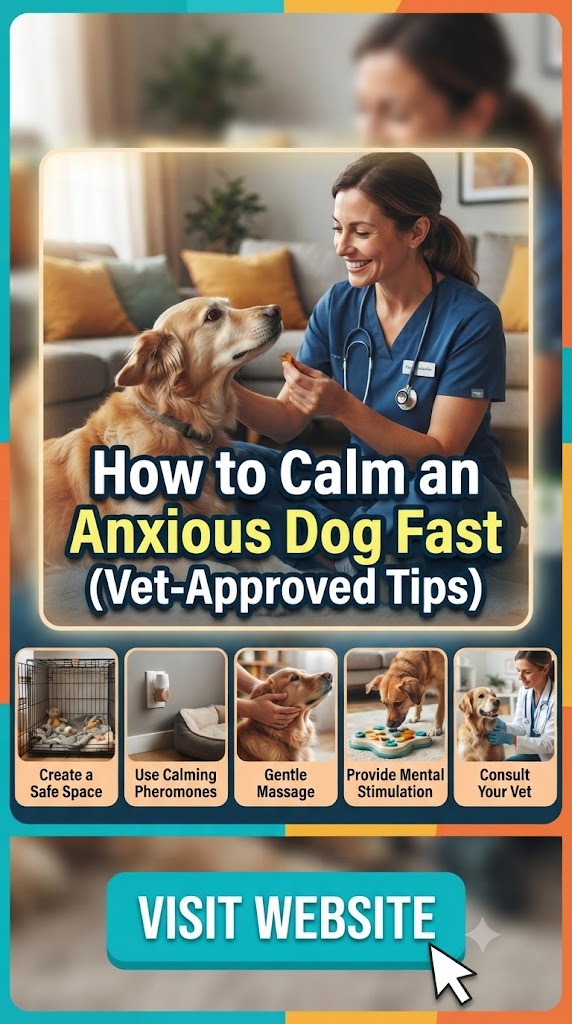
Mother dogs emit “appeasing pheromones” to calm their pups. Synthetic versions, such as Adaptil, come in diffusers, sprays, and collars. While not a “cure-all,” they provide a subtle chemical signal to the dog’s brain that the environment is safe.
Safe Spaces (The “Den” Instinct)
Create a “Zen Zone.” This should be a darkened room or a crate covered with a heavy blanket. Fill it with their favorite bed and a piece of your unwashed clothing. The scent of “you” acts as a biological security blanket.
4. The Long Game: Behavioral Modification and Training
While immediate fixes are great for emergencies, long-term peace requires changing how your dog’s brain processes fear.
Desensitization and Counter-Conditioning (DSCC)
This is the gold standard of behavioral therapy.
- Desensitization: Expose the dog to a very low level of the trigger (e.g., a quiet recording of thunder) that doesn’t cause a reaction.
- Counter-Conditioning: Pair that low-level trigger with a high-value reward (like boiled chicken or steak).
- The Goal: Over time, the dog stops thinking “Oh no, thunder!” and starts thinking “Oh boy, chicken!”
The “Departure Cues” Trick
For separation anxiety, you must break the chain of events that leads to their panic. If your dog starts shaking the moment you pick up your keys, spend the weekend picking up your keys and then sitting on the couch to watch TV. Put on your coat and then go wash the dishes. By decoupling the “cue” from the “departure,” you lower the dog’s anticipatory anxiety.
Scent Work and Mental Stimulation
Anxiety is often fueled by pent-up mental energy. Engaging a dog’s nose is one of the fastest ways to tire their brain. “Find it” games or using Snuffle Mats forces the dog to focus, which physically inhibits the “fight or flight” response.
5. Diet, Supplements, and Holistic Health
What goes into your dog’s body directly impacts their neurological health.
The Gut-Brain Connection
Emerging research suggests that a healthy microbiome can lead to a calmer dog. High-quality probiotics, specifically those containing Bifidobacterium longum, have been shown to reduce barking and jumping in stressed dogs.
Natural Supplements
- L-Theanine: An amino acid found in green tea that promotes relaxation without drowsiness.
- Melatonin: Useful for noise phobias and helping senior dogs regulate their sleep-wake cycles.
- CBD Oil: While more clinical trials are needed, anecdotal evidence and some preliminary studies suggest that high-quality, THC-free CBD can significantly reduce situational anxiety. Always consult a vet for dosing.
- Valerian Root and Chamomile: Mild sedatives that can be used in tea form (cooled) or as treats.
Magnesium
Magnesium is known as “nature’s relaxant.” Many commercial dog foods are low in bioavailable magnesium. Supplementing (under veterinary guidance) can help relax tense muscles and soothe the nervous system.
6. Environmental Management: Setting Them Up for Success
Sometimes, the best way to handle anxiety is to prevent it from being triggered in the first place.
- Window Film: If your dog barks at every person passing by, use frosted window film. It lets light in but removes the visual stimulus that triggers their “guarding” anxiety.
- Strategic Exercise: Don’t just walk your dog; exhaust them before a known stressful event. A dog who has just finished a 3-mile hike is much less likely to have the energy for a panic attack during a thunderstorm.
- Lick Mats and KONGs: Licking is a repetitive behavior that releases soothing hormones in a dog’s brain. A frozen KONG filled with peanut butter can provide 30 minutes of “enforced meditation.”
7. The Human Factor: Are You Part of the Problem?
It’s a hard pill to swallow, but dogs are emotional sponges. They can detect a rise in our cortisol levels and a change in our heart rate from several feet away.
Energy Transfer
If you see a storm coming and start frantically closing windows and checking on the dog with a worried voice (“Oh, poor Rex, are you okay? It’s okay, don’t be scared!”), you are confirming to Rex that there is indeed something to be terrified of.
The “Calm Command”
Model the behavior you want to see. Move slowly, speak in low, melodic tones, and go about your business as if nothing is wrong. Your confidence provides a “social buffer” that tells your dog the pack is safe.
8. When to Call in the Pros: Medication and Behaviorists
Sometimes, a dog’s anxiety is so severe that they are in a constant state of “flooding”—a psychological term for being so overwhelmed that no learning can take place. In these cases, training alone won’t work because the dog’s brain is offline.
Veterinary Intervention
Don’t be afraid of “doggie Prozac” (Fluoxetine) or other medications like Trazodone or Gabapentin. These drugs are not meant to sedate your dog or change their personality; they are meant to “lower the floor” of their anxiety so that training and behavior modification can finally be effective.
Certified Applied Animal Behaviorists (CAAB)
A standard dog trainer may not be equipped to handle deep-seated trauma or severe separation anxiety. Look for a professional with an IAABC or CCPDT certification. They understand the neurobiology of fear and can create a custom desensitization plan.
9. Scenario-Specific Survival Guides
Survival Guide: Fireworks and New Year’s Eve
- Early Exercise: Morning of the event, do a high-intensity activity.
- The Sound Buffer: Turn on a loud fan and the TV.
- The Bathroom Trick: Many bathrooms are windowless and have extra insulation. If your dog wants to hide behind the toilet, let them. It’s likely the quietest place in the house.
Survival Guide: The Dreaded Vet Visit
- Happy Visits: Take your dog to the vet just to get a treat and leave. Do this five times for every one “real” appointment.
- Muzzle Training: If your dog snaps when stressed, train them to love wearing a basket muzzle using treats. It removes the stress of the vet worrying about being bitten, which in turn calms the whole room.
Survival Guide: Traveling and Car Anxiety
- Restraint: A secure harness or crate makes a dog feel physically more stable during turns and stops.
- Temperature: Keep the car cool. Anxiety raises body temperature, and a hot dog is a stressed dog.
10. Conclusion: Patience is the Greatest Remedy
Calming an anxious dog isn’t about a single magic pill or a one-time training session. It is a journey of building trust and creating an environment where your dog feels truly seen and protected.
The most important thing you can offer your anxious dog is patience. They aren’t “giving you a hard time”—they are having a hard time. When you approach their fear with empathy instead of frustration, you’ve already won half the battle. Through a combination of environmental management, physical comfort, and positive reinforcement, you can help your dog transition from a life of fear to a life of wagging tails and peaceful naps.
Your dog’s world is a small one, and you are the center of it. By becoming their calm in the storm, you’re not just fixing a behavior—you’re saving their spirit.