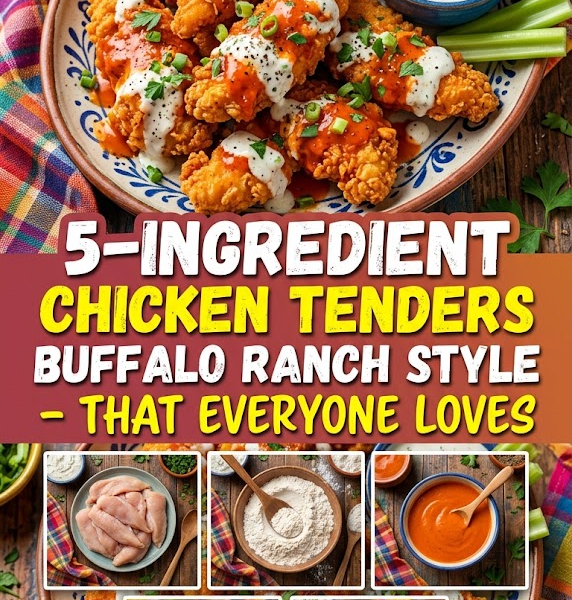
The 5-Ingredient Buffalo Ranch Chicken Tenders are exactly that. Combining the fiery, vinegar-forward punch of classic Buffalo sauce with the cool, herby, and creamy undertones of ranch, these tenders offer a flavor profile that is quintessentially American. Whether you are prepping for a Sunday game day, looking for a quick weeknight dinner that the kids will actually eat, or hosting a casual get-together with friends, these tenders are the answer.
In this comprehensive guide, we will dive deep into why this recipe works, the science behind the perfect crunch, the best cooking methods, and how you can master this 5-ingredient miracle in your own kitchen.
The Philosophy of the 5-Ingredient Meal
Why five ingredients? The number five represents a “sweet spot” in culinary minimalism. It is enough to provide complexity—acid, fat, salt, heat, and protein—without overwhelming the cook or the palate. When you limit yourself to five high-quality components, each ingredient must work harder. There is no room for filler.
In this recipe, the five components are:
- Chicken Tenderloins: The lean, tender star of the show.
- Buffalo Sauce: The source of heat, vinegar, and buttery richness.
- Ranch Seasoning (or Dressing): The herbal, creamy counterbalance.
- Breading (Panko or Breadcrumbs): The essential texture provider.
- Cooking Fat (Butter or Oil): The medium that delivers the golden-brown finish.
By focusing on these five pillars, you create a dish that is focused, punchy, and incredibly efficient to produce.
Breaking Down the Ingredients: Quality is Everything
When the ingredient list is short, the quality of each item becomes paramount. Let’s look at what you should look for when shopping for these Buffalo Ranch Tenders.
1. The Chicken: Tenderloins vs. Breast
While you can certainly slice a chicken breast into strips, using actual chicken tenderloins (the small strip of meat attached to the underside of each breast) is superior. Tenderloins are naturally more succulent and have a more delicate grain, meaning they stay juicy even when subjected to the high heat required for a crispy exterior.
Pro Tip: Look for “air-chilled” chicken. This means the chicken wasn’t submerged in water during processing, leading to a better sear and more concentrated flavor.
2. The Buffalo Sauce: The Soul of the Dish
Not all Buffalo sauces are created equal. A true Buffalo sauce is a blend of aged cayenne pepper, vinegar, salt, and garlic, usually emulsified with butter. For this recipe, look for a “Buffalo Wing Sauce” rather than just a “Hot Sauce.” The wing sauce version is thicker and already contains the buttery richness needed to help the breading adhere.
3. The Ranch Element: Powder vs. Liquid
This is where you can customize your flavor. Using Dry Ranch Seasoning Mix provides a concentrated herbal punch (dill, chives, parsley) and a salty tang without adding extra moisture, which helps keep the tenders crispy. If you prefer a creamier, “wet” style tender, you can use a high-quality bottled Ranch dressing as a binder before breading.
4. The Breading: The Quest for Crunch
Panko breadcrumbs are the gold standard here. Unlike traditional breadcrumbs, which are fine and can become dense, Panko is flaky and light. These flakes create more surface area, which translates to a crunchier bite. For those seeking a low-carb option, crushed pork rinds or almond flour can be substituted with excellent results.
5. The Binder: Butter or Oil
If your Buffalo sauce isn’t buttery enough, a small amount of melted salted butter mixed into the sauce helps create that iconic “Buffalo” sheen and flavor. If you are air frying or baking, a light spray of avocado or olive oil is the secret to achieving that golden-brown color without deep frying.
The Science of the Perfect Buffalo Ranch Coating
To understand why Buffalo and Ranch work so well together, we have to look at the chemistry of flavor.
Capsaicin, the compound that makes peppers hot, is fat-soluble. This means that the fat in the ranch (and the butter in the Buffalo sauce) helps to distribute the heat evenly across your tongue rather than letting it burn in one spot. Furthermore, the acetic acid (vinegar) in the Buffalo sauce cuts through the richness of the chicken and the breading, providing a bright, sharp contrast that keeps you coming back for another bite.
The Ranch seasoning adds a “cool” herbal layer. The buttermilk solids found in most ranch powders provide a subtle tang that mimics the fermentation of aged cheese, a classic partner for Buffalo flavors (think blue cheese).
Step-by-Step Guide: Making the Tenders
Follow these steps to ensure your tenders come out perfectly every time.
Step 1: Preparation and Brining (Optional but Recommended)
Even though this is a 5-ingredient recipe, you can elevate it by lightly salting your chicken 20 minutes before cooking. This “dry brine” helps the protein retain moisture. Pat the chicken tenders completely dry with paper towels. Moisture is the enemy of crispiness!
Step 2: The Buffalo-Ranch Bath
In a medium bowl, whisk together your Buffalo sauce and half of your Ranch seasoning. If you are using liquid Ranch dressing, mix it 1:1 with the Buffalo sauce. Submerge the chicken tenders in this mixture. Let them marinate for at least 15 minutes, or up to 2 hours in the fridge. This ensures the flavor penetrates the meat, not just the crust.
Step 3: The Breading Station
In a shallow dish, combine your Panko breadcrumbs with the remaining Ranch seasoning. This ensures that the herbal flavor is present in every layer of the dish.
One by one, take a tender from the Buffalo mixture, let the excess drip off, and press it firmly into the Panko mixture. Ensure every nook and cranny is covered. For an extra-thick crust, you can do a “double dip,” but for most, a single, firm press is perfect.
Step 4: The Cooking Process
There are three primary ways to cook these tenders. Choose the one that fits your lifestyle:
Option A: The Air Fryer (The Healthiest Crunch)
Preheat your air fryer to 400°F (200°C). Lightly spray the basket with oil. Place the tenders in a single layer, ensuring they do not touch. Spray the tops of the tenders with a bit of oil. Cook for 10-12 minutes, flipping halfway through, until the internal temperature reaches 165°F and the outside is mahogany brown.
Option B: Oven Baked (Great for Large Batches)
Preheat your oven to 425°F (220°C). Place a wire cooling rack on top of a baking sheet. This allows hot air to circulate under the chicken, preventing a soggy bottom. Place the tenders on the rack and bake for 15-18 minutes. For extra color, broil on high for the last 60 seconds.
Option C: Pan Seared (The Most Flavorful)
Heat a large skillet over medium-high heat with 2 tablespoons of oil or butter. Once the oil shimmers, add the tenders. Cook for 3-4 minutes per side. This method provides the most traditional “fried chicken” feel with less oil than deep frying.
Why Everyone Loves This Recipe: The Versatility Factor
One of the reasons this specific flavor profile has taken over American menus is its versatility. These tenders aren’t just a main course; they are a building block for dozens of other meals.
1. Buffalo Ranch Chicken Salad
Slice the warm tenders and place them over a bed of crisp romaine lettuce. Add cherry tomatoes, sliced cucumbers, and some crumbled blue cheese. The Buffalo sauce from the chicken acts as a “warm dressing” that wilts the greens slightly, creating a gourmet salad experience.
2. The Ultimate Buffalo Ranch Wrap
Take a large flour tortilla, spread a thin layer of cream cheese (to prevent sogginess), add two tenders, some shredded carrots, and celery. Wrap it tightly for a portable, high-protein lunch that beats any fast-food option.
3. Buffalo Chicken Sliders
Place a tender on a toasted brioche slider bun. Top with a slice of pepper jack cheese and a single pickle chip. These are the ultimate crowd-pleasers for Super Bowl parties or birthday bashes.
4. Loaded Buffalo Fries
Chop the cooked tenders into bite-sized pieces. Strew them over a plate of hot french fries, drizzle with extra ranch and buffalo sauce, and top with melted cheddar cheese and green onions.
Perfecting the Dip: The “Sixth” Ingredient
While the tenders are flavorful enough to stand on their own, a dipping sauce can take them to the next level. Since you already have the core ingredients, you can make a “Hybrid Dip.”
Mix equal parts Ranch dressing and Buffalo sauce, then add a squeeze of fresh lime juice and a pinch of black pepper. This “Creamy Buffalo Dip” mirrors the flavors inside the chicken and provides a cool, refreshing finish to the spicy heat.
Pro-Tips for Success
To ensure your 5-ingredient Buffalo Ranch Chicken Tenders are the talk of the town, keep these professional tips in mind:
- Don’t Overcrowd the Pan: Whether air frying or pan-searing, overcrowding lowers the temperature of the cooking surface and creates steam. Steam leads to soggy breading. Cook in batches if necessary.
- The Temperature Check: Use an instant-read thermometer. Chicken tenders are small and thin; they can go from “perfectly juicy” to “cardboard dry” in just 90 seconds. Pull them out at 160°F, as residual heat will bring them to the safe 165°F.
- Let Them Rest: Give your tenders 2-3 minutes to rest on a wire rack after cooking. This allows the juices to redistribute and the crust to “set,” ensuring it doesn’t fall off when you take your first bite.
- Spice Control: If you are cooking for kids who are sensitive to heat, look for “Mild” Buffalo sauce or mix the Buffalo sauce with a little extra melted butter or honey to mellow out the cayenne kick.
Dietary Adaptations
In the modern kitchen, we often need to accommodate different dietary needs. Here is how you can adapt this 5-ingredient recipe without losing the soul of the dish:
Gluten-Free Version
Substitute the Panko breadcrumbs with gluten-free Panko or crushed gluten-free crackers. Ensure your Buffalo sauce and Ranch seasoning are certified gluten-free, as some brands use thickeners derived from wheat.
Keto/Low-Carb Version
Instead of Panko, use a mixture of crushed pork rinds (chicharrones) and grated Parmesan cheese. This creates an incredibly crispy, zero-carb crust that tastes even more indulgent than the original.
Dairy-Free Version
Use a dairy-free Buffalo sauce (many are naturally dairy-free, but check for butter) and a vegan Ranch seasoning or dressing made from cashew or almond milk.
Storage and Reheating: Making the Most of Leftovers
If you happen to have leftovers (a rare occurrence with this recipe!), storing them correctly is key to maintaining that crunch.
- Storage: Keep the tenders in an airtight container in the refrigerator for up to 3 days.
- The Reheating Secret: Never use the microwave for breaded chicken! It will make the breading rubbery and the meat tough. Instead, put them back in the air fryer at 350°F for 3-4 minutes, or in a toaster oven. This reactivates the fats in the breading, making them crispy again.
- Freezing: You can freeze these tenders after breading but before cooking. Place them on a baking sheet in the freezer for one hour (flash freezing), then transfer to a freezer bag. Cook directly from frozen, adding 5-7 minutes to the cooking time.
The Cultural Impact: Why Buffalo Ranch is the King of Flavors
The combination of Buffalo and Ranch isn’t just a culinary trend; it’s a cultural phenomenon. Originating in Buffalo, New York, in the 1960s, Buffalo sauce was a localized specialty until it exploded nationally in the 80s and 90s. Ranch dressing, developed at Hidden Valley Ranch in the 1950s, followed a similar trajectory to become America’s favorite dressing.
When these two titans met, they created a flavor profile that covers every part of the human palate.
- Salty: From the sauce and seasoning.
- Sour: From the vinegar and buttermilk.
- Spicy: From the cayenne.
- Umami: From the chicken and garlic in the ranch.
- Sweet: Subtle notes from the butter and the chicken itself.
By condensing this legendary pairing into a 5-ingredient recipe, you are tapping into a flavor history that resonates with almost everyone.
Frequently Asked Questions (FAQs)
Q: Can I use chicken thighs instead of tenderloins? A: Absolutely. Chicken thighs are even more forgiving because of their higher fat content. Just be sure to trim them into strips and recognize that they may take 2-3 minutes longer to cook than white meat.
Q: My breading keeps falling off. What am I doing wrong? A: This usually happens for two reasons: the chicken was too wet before the sauce, or you didn’t press the breadcrumbs firmly enough. Make sure to pat the chicken dry first, and don’t be afraid to really “smush” the Panko into the meat.
Q: Is Buffalo sauce the same as hot sauce? A: No. Hot sauce (like Tabasco) is mostly peppers and vinegar and is very thin. Buffalo sauce is hot sauce that has been “cut” with a fat (usually butter) and often has extra garlic and thickeners. For this recipe, you definitely want Buffalo sauce.
Q: How can I make these extra spicy? A: Add a teaspoon of cayenne pepper or a few dashes of habanero hot sauce to your Buffalo-Ranch marinade. You can also add red pepper flakes directly into the Panko breading.
Q: Can I make these in a slow cooker? A: While you can cook Buffalo Ranch chicken in a slow cooker, you will lose the “tender” aspect. It will become shredded chicken. If you want the crispy, breaded tender experience, the air fryer or oven is the way to go.
Conclusion: The Ultimate Crowd-Pleaser
The 5-Ingredient Buffalo Ranch Chicken Tenders represent the pinnacle of home-cooking efficiency. They prove that you don’t need a pantry full of exotic spices or a sink full of dirty dishes to create something truly spectacular.
With the heat of the Buffalo sauce, the herbal comfort of the Ranch, and the satisfying crunch of the Panko, these tenders hit every note. They are a testament to the idea that sometimes, the simplest recipes are the ones that bring us the most joy.
Next time you’re standing in the grocery store aisle, wondering what to make for dinner, remember the “Power of Five.” Grab your chicken, your sauce, your ranch, your breadcrumbs, and your cooking oil. In less than 30 minutes, you’ll be serving a meal that everyone—from the pickiest toddler to the most discerning foodie—will absolutely love.
Enjoy the crunch, embrace the heat, and savor the simplicity. Happy cooking!