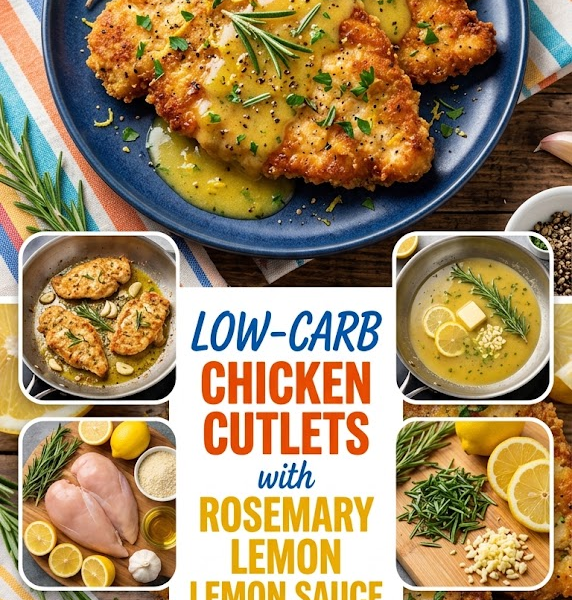
However, flavor and health do not have to be mutually exclusive. Enter the Low-Carb Chicken Cutlet with Rosemary Lemon Sauce. This dish is a masterclass in culinary balance. It combines the crunch of a perfectly “breaded” crust (without the flour), the succulence of thin-pounded poultry, and a bright, velvety sauce that hits every note on the palate: acid, fat, salt, and herb.
In this comprehensive guide, we will dive deep into why this recipe works, the science behind the ingredients, and a step-by-step methodology to ensure you achieve restaurant-quality results in your own kitchen.
Why This Recipe Redefines Low-Carb Dining
Most low-carb recipes suffer from a lack of texture. When you remove the flour and breadcrumbs, you often lose the satisfying “crunch” that makes fried or sautéed protein so appealing. This recipe solves that problem by utilizing a strategic blend of almond flour and finely grated Parmesan cheese. This duo creates a crust that browns beautifully and provides a nutty, savory depth that traditional wheat flour simply cannot match.
Furthermore, the Rosemary Lemon Sauce is not merely a garnish; it is a transformative element. It cuts through the richness of the chicken, providing a citrusy lift that awakens the taste buds while the rosemary adds an earthy, aromatic backbone.
The Foundation: Sourcing Your Ingredients
A recipe is only as good as its components. Because this dish relies on simple, bold flavors, the quality of your ingredients will dictate the final outcome.
1. The Chicken
For the best results, use organic, air-dried chicken breasts. Air-dried chicken has less water content than chicken cooled in a water bath, which means it will sear more effectively and won’t release excess moisture into the pan, ensuring your crust stays crispy.
2. The Low-Carb “Breading”
- Super-Fine Almond Flour: Look for “blanched” almond flour. This means the skins have been removed, resulting in a lighter color and a texture that mimics traditional flour more closely.
- Parmesan Cheese: Use the real stuff—Parmigiano Reggiano if possible. The pre-shaken green cans contain anti-clumping agents (cellulose) that can prevent the cheese from melting and crisping properly on the chicken.
3. Fresh Herbs
Fresh rosemary is non-negotiable. Dried rosemary can be needle-like and overly pungent in a way that doesn’t meld well with a delicate pan sauce. Fresh rosemary contains volatile oils that release a piney, citrus-like aroma when hitting the hot butter.
4. The Fat
A combination of avocado oil and grass-fed butter is ideal. Avocado oil has a high smoke point, allowing you to sear the chicken without the oil breaking down, while butter provides the flavor and helps the sauce emulsify.
The Art of the Cutlet: Preparation and Technique
Before the heat even touches the pan, the preparation of the chicken is the most critical step.
Pounding the Chicken
To achieve the classic “cutlet” texture, you must pound the chicken to an even thickness. This serves two purposes:
- Even Cooking: Thicker parts of a breast take longer to cook than the tapered ends. Pounding ensures the entire piece cooks at the same rate, preventing the edges from drying out.
- Tenderness: The mechanical action of pounding breaks down some of the muscle fibers, making the chicken incredibly tender.
Pro Tip: Place the chicken breast between two sheets of plastic wrap or in a heavy-duty gallon freezer bag. Use the flat side of a meat mallet or a heavy rolling pin to gently pound from the center outward until the chicken is about 1/4 inch thick.
The Standard Breading Procedure (Low-Carb Style)
To get the coating to stick without a traditional flour dredge, we use a three-step process:
- Drying: Pat the chicken extremely dry with paper towels. Moisture is the enemy of a crisp crust.
- The Binder: Whisked eggs act as the “glue.” Add a splash of water or heavy cream to the eggs to thin them slightly.
- The Coating: A 50/50 mix of almond flour and Parmesan, seasoned liberally with salt, black pepper, and garlic powder.
Step-by-Step Instructions
Ingredients List
For the Chicken:
- 4 boneless, skinless chicken breasts (pounded to 1/4 inch thickness)
- 1 cup blanched almond flour
- 1 cup finely grated Parmesan cheese
- 2 large eggs
- 1 teaspoon garlic powder
- 1 teaspoon onion powder
- Sea salt and freshly cracked black pepper to taste
- 2 tablespoons avocado oil (or olive oil)
- 2 tablespoons grass-fed butter
For the Rosemary Lemon Sauce:
- 1/2 cup high-quality chicken bone broth
- Juice of 2 large lemons (about 1/4 cup)
- Zest of 1 lemon
- 3 sprigs of fresh rosemary (leaves stripped and finely chopped)
- 2 cloves of garlic, minced
- 4 tablespoons cold grass-fed butter (cubed)
- Optional: 2 tablespoons heavy cream for a richer sauce
Instructions
1. Prepare the Coating Station
In one shallow bowl, whisk the eggs with a pinch of salt. In a second shallow bowl, combine the almond flour, Parmesan cheese, garlic powder, onion powder, salt, and pepper. Mix well to ensure the seasoning is distributed.
2. Coat the Chicken
Take a pounded chicken cutlet and dip it into the egg wash, ensuring all sides are covered. Let the excess drip off. Place the chicken into the almond flour mixture, pressing firmly so the “breading” adheres. Flip and repeat. Set the coated cutlets on a wire rack for 5 minutes before cooking; this helps the coating “set” so it doesn’t fall off in the pan.
3. The Sear
Heat a large skillet (cast iron or stainless steel is best) over medium-high heat. Add the avocado oil and 2 tablespoons of butter. Once the butter is foaming, place two cutlets in the pan. Do not overcrowd. Cook for 3–4 minutes per side until the crust is a deep golden brown and the internal temperature reaches 165°F (74°C). Remove the chicken and set it aside on a warm plate. Repeat with the remaining cutlets.
4. Deglaze and Build the Sauce
In the same skillet (do not wipe it out!), reduce the heat to medium. Add the minced garlic and chopped rosemary. Sauté for about 30 seconds until fragrant—be careful not to burn the garlic. Pour in the chicken broth and lemon juice. Use a wooden spoon to scrape up all the brown bits (the fond) from the bottom of the pan. This is where the concentrated flavor lives.
5. Emulsify
Let the liquid simmer and reduce by half. This should take about 3–5 minutes. If you want a creamier sauce, whisk in the heavy cream now. Turn the heat to low. Whisk in the cold cubes of butter, one at a time, until the sauce is glossy and slightly thickened. Stir in the lemon zest.
6. Serving
Place the crispy cutlets back into the pan for 30 seconds to coat them in the sauce, or simply spoon the sauce generously over the chicken on the serving plates. Garnish with an extra sprig of rosemary and a slice of lemon.
The Science of Flavor: Why Rosemary and Lemon?
Understanding the chemistry of your ingredients can elevate your cooking from a routine task to an art form.
The Power of Lemon (Acid)
In cooking, acidity acts as a “brightener.” Just as salt enhances flavor, acid balances it. The fat from the almond flour, Parmesan, and butter can feel “heavy” on the tongue. The citric acid in lemon juice breaks through that lipid layer, cleansing the palate and making the other flavors—like the savory chicken and the earthy rosemary—stand out more clearly.
The Aromatic Depth of Rosemary
Rosemary is a hardy herb containing eucalyptol, camphor, and alpha-pinene. These compounds give it a woody, balsamic aroma. When cooked in fat (butter), these fat-soluble flavor compounds are released, infusing the entire sauce. Rosemary also has a natural affinity for poultry, a pairing that has been a staple in Mediterranean cuisine for centuries.
The Maillard Reaction
When you sear the chicken cutlets, you are witnessing the Maillard reaction. This is a chemical reaction between amino acids and reducing sugars that gives browned food its distinctive flavor. Because we are using almond flour and cheese, this reaction happens beautifully, creating a complex, toasted flavor profile that raw or boiled chicken lacks.
Health Benefits and Nutritional Profile
This dish isn’t just about big flavor; it’s a nutritional powerhouse designed for modern dietary needs.
Low Carbohydrate, High Satiety
By replacing breadcrumbs with almond flour and Parmesan, we significantly reduce the net carb count. A typical breaded chicken cutlet can contain 15–20 grams of carbohydrates. This version contains approximately 3–5 grams of net carbs per serving, making it ideal for those in ketosis.
Healthy Fats
Almond flour provides monounsaturated fats, which are heart-healthy. Using grass-fed butter adds Conjugated Linoleic Acid (CLA) and Vitamin K2, which are often missing from conventional diets.
High Protein
Chicken breast is one of the leanest and most bioavailable sources of protein. Protein is essential for muscle repair, immune function, and keeping you full for longer periods, which aids in weight management.
Best Low-Carb Side Dishes to Pair
To keep the meal cohesive and low-carb, consider these sides that complement the rosemary lemon profile:
- Garlic Herb Cauliflower Mash: A keto alternative to mashed potatoes. The creamy texture soaks up the rosemary lemon sauce perfectly.
- Roasted Asparagus with Sea Salt: The snap of fresh asparagus provides a great textural contrast to the tender chicken.
- Zucchini Noodles (Zoodles): Tossed in a little olive oil and garlic, these act as a “pasta” base for the chicken and sauce.
- Arugula Salad with Shaved Parmesan: The peppery bite of arugula and a simple lemon vinaigrette mirrors the flavors in the main dish.
- Sautéed Spinach with Nutmeg: A classic pairing that adds a punch of iron and fiber without many calories.
Troubleshooting and Cooking Tips
Why did my breading fall off?
This usually happens for three reasons:
- The chicken was wet: Always pat the meat dry before breading.
- You flipped it too soon: Let the crust develop and release naturally from the pan before flipping.
- Temperature: If the pan isn’t hot enough, the “breading” will steam instead of sear, causing it to turn mushy and slide off.
Can I use chicken thighs?
Yes! Boneless, skinless chicken thighs are excellent in this recipe. They have a higher fat content, making them even more flavorful and forgiving if overcooked. Just be sure to pound them to an even thickness as you would with the breasts.
How do I keep the almond flour from burning?
Almond flour has a lower burning point than wheat flour. If you notice the crust is browning too quickly, lower the heat to medium and add a bit more oil or butter to the pan to regulate the temperature.
Kitchen Tools You Will Need
To execute this recipe with precision, ensure you have the following:
- Meat Mallet: For even pounding.
- Large Skillet: Cast iron or heavy-duty stainless steel is preferred for superior heat retention.
- Fine Grater/Microplane: Essential for zesting the lemon and finely grating the Parmesan.
- Whisk: To emulsify the butter into the sauce.
- Instant-Read Meat Thermometer: The only way to guarantee the chicken is cooked through but still juicy.
Meal Prep and Storage Guidelines
This recipe is excellent for meal prep, although the “crunch” of the cutlet is best enjoyed fresh.
- Fridge: Store leftovers in an airtight container for up to 3 days.
- Reheating: To maintain the texture, avoid the microwave. Instead, reheat the cutlets in a toaster oven or a skillet over medium heat until warmed through. Reheat the sauce separately in a small saucepan, adding a splash of water or broth if it has thickened too much in the fridge.
- Freezing: You can freeze the breaded (but uncooked) cutlets. Place them on a baking sheet to flash-freeze, then transfer them to a freezer bag. Cook directly from frozen, adding a few extra minutes to the cook time.
Ingredient Substitutions for Different Diets
- Dairy-Free / Paleo: Omit the Parmesan cheese and use extra almond flour or crushed pork rinds for the breading. Substitute the butter in the sauce with ghee or coconut cream.
- Nut-Free: Substitute the almond flour with crushed pork rinds or sunflower seed flour.
- Whole30: Ensure your chicken broth has no added sugars or non-compliant additives. Use ghee instead of butter and omit the Parmesan cheese.
Advanced Flavor Variations
Once you have mastered the base recipe, try these variations:
1. The Mediterranean Twist
Add 2 tablespoons of capers and 1/4 cup of halved cherry tomatoes to the sauce during the reduction phase. This creates a “Piccata” style dish with an earthy rosemary twist.
2. The Creamy Mushroom Version
Sauté 1 cup of sliced cremini mushrooms in the pan before making the sauce. The earthiness of the mushrooms complements the rosemary beautifully.
3. The Spicy Kick
Add a pinch of red pepper flakes to the almond flour mixture and a dash of hot sauce to the lemon sauce for a zesty, spicy finish.
Frequently Asked Questions (FAQ)
Is almond flour really better than coconut flour for frying?
Yes. Coconut flour is extremely absorbent and can make the coating feel dry or gritty. Almond flour has a higher fat content and a coarser texture that mimics breadcrumbs much more effectively.
Can I bake these instead of pan-frying?
You can, but you won’t get the same golden-brown crust. If baking, place the cutlets on a wire rack over a baking sheet and bake at 400°F (200°C) for 15–20 minutes. Spritz them with a little oil spray before baking to help them brown.
Why is my sauce “broken” or oily?
A sauce “breaks” when the fat separates from the liquid. This usually happens if the heat is too high when you add the butter. Always whisk in cold butter over low heat to create a stable emulsion.
Do I have to use fresh rosemary?
While fresh is best, if you must use dried, use only 1/3 of the amount called for, as dried herbs are more concentrated. Crush the dried rosemary between your fingers before adding it to help release the oils.
The Philosophy of “Big Flavor” in Healthy Cooking
The “Big Flavor” mentioned in the title of this recipe isn’t just a marketing phrase; it’s a culinary philosophy. When we remove sugar and processed carbohydrates from our diet, our taste buds begin to change. We become more sensitive to the natural sweetness of vegetables, the richness of high-quality fats, and the complexity of fresh herbs.
This Low-Carb Chicken Cutlet recipe leans into that. It doesn’t try to “hide” the fact that it’s healthy. Instead, it highlights the ingredients. The zing of the lemon is bright and unapologetic. The rosemary is fragrant and bold. The Parmesan is salty and umami-rich. By using these high-impact ingredients, we create a meal that feels indulgent and satisfying, proving once and for all that a low-carb lifestyle is not one of deprivation, but of discovery.
Conclusion
The Low-Carb Chicken Cutlet with Rosemary Lemon Sauce is a versatile, elegant, and deeply satisfying dish that fits perfectly into a modern, health-conscious lifestyle. Whether you are hosting a dinner party and want to impress your guests, or you are looking for a quick 30-minute meal to fuel your family, this recipe delivers on all fronts.
By mastering the simple techniques of pounding the meat, creating a keto-friendly crust, and emulsifying a classic pan sauce, you gain a foundational skill set that can be applied to countless other proteins and flavors. So, grab your skillet, zest your lemons, and get ready to enjoy a meal that is as good for your body as it is for your soul.
This is more than just a recipe; it’s a blueprint for flavorful, low-carb living. Enjoy the crunch, savor the sauce, and relish the fact that you don’t have to choose between your health and your taste buds.