The Silent Killer in Your Dog’s Mouth: Dog Dental Care Secrets Every Owner Needs to Know
We’ve all been there—the “stinky dog breath” that makes you recoil when your furry best friend comes in for a celebratory lick. For decades, we’ve been told that “dog breath” is just part of the package. We’ve been conditioned to believe that a foul odor emanating from a canine’s maw is as natural as their wagging tail.
But here is the secret the pet industry doesn’t always lead with: Dog breath isn’t normal. It’s a warning sign.
In fact, by the age of three, approximately 80% of dogs show signs of periodontal disease. What starts as a little yellowing on the canines can quickly escalate into a systemic health crisis that shortens your dog’s life by years. If you want your dog to live to a ripe old age, the secret doesn’t lie in expensive gadgets or fancy collars—it lies in their mouth.
The Anatomy of a Canine Dental Crisis
To understand how to save your dog’s teeth, you first have to understand the invisible war happening in their gums.
Plaque: The Invisible Enemy
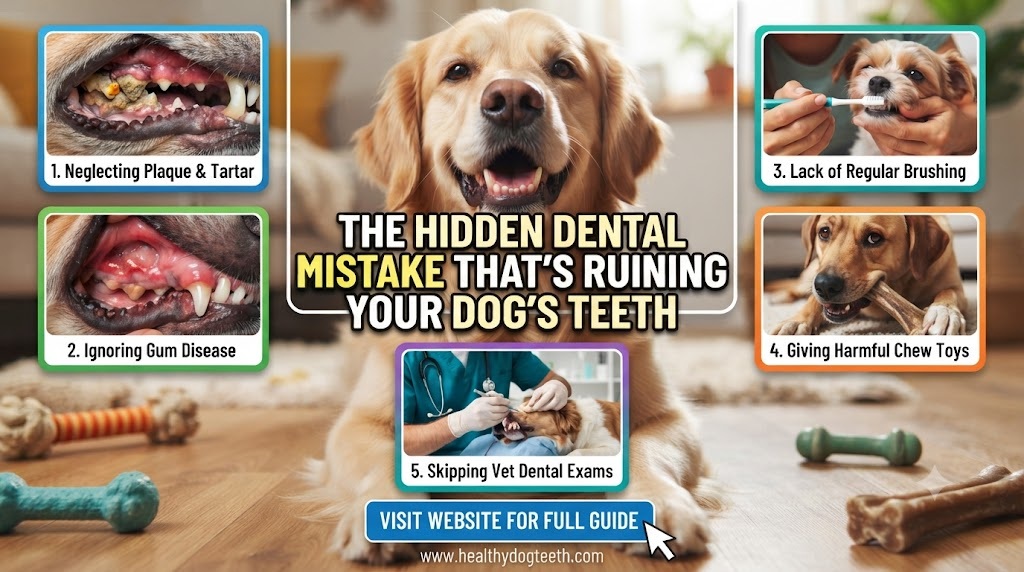
Every time your dog eats, a biofilm of bacteria, saliva, and food particles forms on their teeth. This is plaque. In humans, we brush this away twice a day. In dogs, it’s often left to sit. Within 48 to 72 hours, this soft plaque mixes with minerals in the saliva and hardens into tartar (calculus). Once plaque turns to tartar, you cannot brush it off. It requires professional scaling.
The Gum Line: The Real Battleground
The yellow or brown buildup you see on the surface of the tooth is ugly, but it isn’t the primary killer. The real danger lies under the gum line. Bacteria migrate into the gingival sulcus (the pocket between the tooth and gum), where they release toxins that destroy the bone and tissue holding the tooth in place. This is “silent” because dogs are masters at hiding pain. They will continue to eat and play even while their jawbone is literally rotting away.
The Shocking Link Between Teeth and Heart Failure
This is perhaps the best-kept secret in veterinary medicine: dental disease is a systemic disease.
When your dog has inflamed, bleeding gums (gingivitis), their mouth becomes a gateway to the bloodstream. Every time they chew a toy or a piece of kibble, thousands of bacteria are pumped into their circulatory system. This is known as bacteremia.
These bacteria have a “preference” for certain organs:
- The Heart: Bacteria can attach to the heart valves, leading to endocarditis and eventual heart failure.
- The Kidneys: The kidneys act as a filter for the blood. Constant bacterial bombardment leads to chronic inflammation and kidney scarring.
- The Liver: As the body’s detoxifier, the liver becomes overworked trying to manage the constant influx of oral pathogens.
Research suggests that dogs with severe periodontal disease are significantly more likely to suffer from early-onset organ failure. By fixing their mouth, you aren’t just freshening their breath; you are adding years to their life.
The “Golden Rule” of Brushing: It’s Not About the Scrub
Most owners fail at brushing because they treat it like a chore or an Olympic wrestling match. The secret to successful dog dental care is the “Two-Minute Rule”—but not in the way you think.
1. Flavor First, Friction Second
Don’t start with a toothbrush. Start with a high-quality, enzymatic dog toothpaste. These pastes contain enzymes (like glucose oxidase) that chemically break down plaque even without heavy scrubbing. Let your dog lick the paste off your finger for a week. They need to view the “toothbrush” as a treat dispenser.
2. The 45-Degree Angle Secret
When you finally introduce a brush, don’t focus on the flat surface of the tooth. Focus on the gum line. Tilt the bristles at a 45-degree angle so they can gently slip under the edge of the gum. This is where the disease-causing bacteria hide.
3. Forget the Inside
Here is a secret that will save you a lot of stress: you don’t really need to brush the inside of your dog’s teeth (the tongue side). A dog’s tongue is remarkably abrasive and naturally keeps the inner surfaces relatively clean. Focus 100% of your energy on the outside surfaces of the upper cheek teeth. This is where 90% of dental disease occurs.
The “Fingernail Test” for Chew Toys
The market is flooded with “dental chews” and “indestructible bones.” However, many of these are actually dangerous. Veterinary dentists use a simple rule: The Fingernail Test.
If you can’t make a dent in a chew toy with your thumbnail, it is too hard for your dog’s teeth. Common culprits that cause “slab fractures” (where the tooth slices off like a piece of wood) include:
- Real Bones (Cooked or Raw): Contrary to popular belief, marrow bones are often harder than the tooth enamel itself.
- Antlers: These are the number one cause of broken upper carnassial teeth in dogs.
- Nylon Bones: Many are too rigid for aggressive chewers.
The Secret of “Mechanical Abrasion”
The best dental toys are those that allow the tooth to sink into the material. As the tooth enters the toy, the fibers or rubber scrub the surface of the tooth all the way to the gum line. Look for toys made of natural rubber with “nubs” or cotton ropes (used under supervision).
Nutritional Bio-Hacks for Cleaner Teeth
While “dental kibble” exists, many owners don’t realize that certain natural additives can drastically change the chemistry of a dog’s mouth.
1. The Seaweed Secret (Ascophyllum nodosum)
There is a specific type of North Atlantic kelp called Ascophyllum nodosum. When ingested, it actually changes the composition of the dog’s saliva, making it harder for plaque to stick to the teeth. It also softens existing tartar over time. It is a “set it and forget it” solution for owners who struggle with brushing.
2. Probiotics for the Mouth
The mouth is an ecosystem. By introducing beneficial bacteria (probiotics) through specialized dental powders or fermented foods, you can “crowd out” the bad, sulfur-producing bacteria that cause bad breath and decay.
3. Raw Carrots and Apples
While not a replacement for brushing, the crunch and fiber of a cold, raw carrot act as a natural “scrubber.” Plus, the high water content helps wash away food particles.
The Tennis Ball Trap: A Hidden Danger
Most dog owners have a tennis ball in their bag. But did you know tennis balls are essentially sandpaper? The “fuzz” on a tennis ball is highly abrasive and designed to withstand high-velocity court friction. When a dog chews on a tennis ball, especially one covered in dirt or sand, it acts as a grinding stone, wearing down the enamel until the sensitive pulp is exposed.
The Secret: Switch to smooth rubber balls. They carry the same bounce but won’t “sand” your dog’s teeth down to nubs.
Professional Cleanings: Anesthesia vs. Anesthesia-Free
This is a controversial topic in the pet world. “Anesthesia-free dental cleaning” sounds like a dream—no risk of drugs, lower cost, and white teeth. But here is the secret vets wish you knew: It’s purely cosmetic.
An anesthesia-free cleaning only addresses the tartar you can see. It does nothing for the bacteria lurking under the gum line. Furthermore, because the dog is awake, the technician cannot use a sharp scaler to clean the subgingival pockets properly. It’s like painting over a termite-infested house—it looks great, but the structure is still rotting.
Professional veterinary cleaning involves:
- X-rays: To see bone loss and abscesses hiding under the surface.
- Subgingival Scaling: Removing the “silent killer” bacteria.
- Polishing: Smoothing the microscopic scratches left by scaling so plaque can’t immediately re-attach.
Identifying the Red Flags (The 5-Step Check)
You should perform a “mouth check” on your dog once a week. Here is what you are looking for:
- The “Lifting the Lip” Test: Look at the back molars. Are they white, or do they look like they’ve been dipped in caramel?
- The Bleed Check: Gently rub a finger along the gums. Does it come away with a pinkish tinge? Bleeding is a sign of active infection.
- The “Quidding” Sign: Does your dog drop bits of food while eating? This is often a sign of oral pain.
- One-Sided Chewing: If your dog only uses one side of their mouth to chew a toy, the other side likely has a painful or loose tooth.
- The Nose Connection: Does your dog have a chronic runny nose on one side? A tooth root abscess in the upper jaw can burst into the nasal cavity.
DIY Doggy Breath Mints
If you want an immediate (though temporary) fix for that “viral” bad breath, you can make your own dental-boosting treats at home.
- Ingredients: Fresh parsley, fresh mint, organic coconut oil.
- The Secret: Parsley is rich in chlorophyll (a natural deodorizer), and mint kills bacteria. Coconut oil contains lauric acid, which is antimicrobial and antifungal.
- Method: Blend the greens with slightly melted coconut oil, pour into a silicone mold, and freeze. Give one “mint” a day to neutralize odors at the source.
The Puppies and Seniors: Different Rules Apply
The Puppy Phase
Puppies have 28 “needle” teeth that fall out by six months of age. The secret here isn’t cleaning—it’s habituation. This is the critical window to touch their mouth, lift their lips, and get them used to the sensation of a brush. If you miss this window, dental care becomes a lifelong struggle.
The Senior Years
As dogs age, their immune systems weaken. A dental infection that a 3-year-old dog can “handle” might overwhelm a 12-year-old dog. For seniors, dental care is no longer about aesthetics; it’s about preventing a “cardiac event” triggered by oral bacteria. Don’t be afraid of senior dentals—modern anesthesia is safer than it has ever been, and the risk of “rotting from the inside out” is far greater.
Why “Water Additives” Are Your Secret Weapon
For the busy dog owner, water additives are the “lazy” secret to success. Look for products containing Chlorhexidine or Xylitol-free enzymatic solutions. These additives work by breaking the molecular bonds of plaque every time the dog takes a drink. It’s like an antiseptic mouthwash that your dog uses 20 times a day.
Note: Always ensure the product is VOHC (Veterinary Oral Health Council) approved to ensure it is safe and effective.
The Economic Reality: Spend $100 Now or $2,000 Later
Many owners skip dental care because they see it as an “optional” expense. This is a massive financial mistake.
- Daily Brushing: Costs about $10 a year in toothpaste.
- Annual Dental Cleaning: Costs $300–$600 depending on the region.
- Emergency Oral Surgery: Extracting multiple rotted teeth, treating a jaw fracture, or managing heart disease costs $2,000–$5,000.
The math is simple: Dental care is the most cost-effective “insurance policy” you can buy for your pet.
Final Thoughts: The Gift of More Years
We often search for the secret to a longer-living dog in expensive supplements or “ancient” diets. But the secret has been right under our noses—literally. A clean mouth is the foundation of a healthy body.
When you commit to your dog’s dental care, you aren’t just getting rid of bad breath. You are clearing the path for their heart to beat stronger, their kidneys to work better, and their days to be pain-free. Start today—lift that lip, grab some kelp, and start the habit that will give you and your dog many more happy, stinky-breath-free years together.