
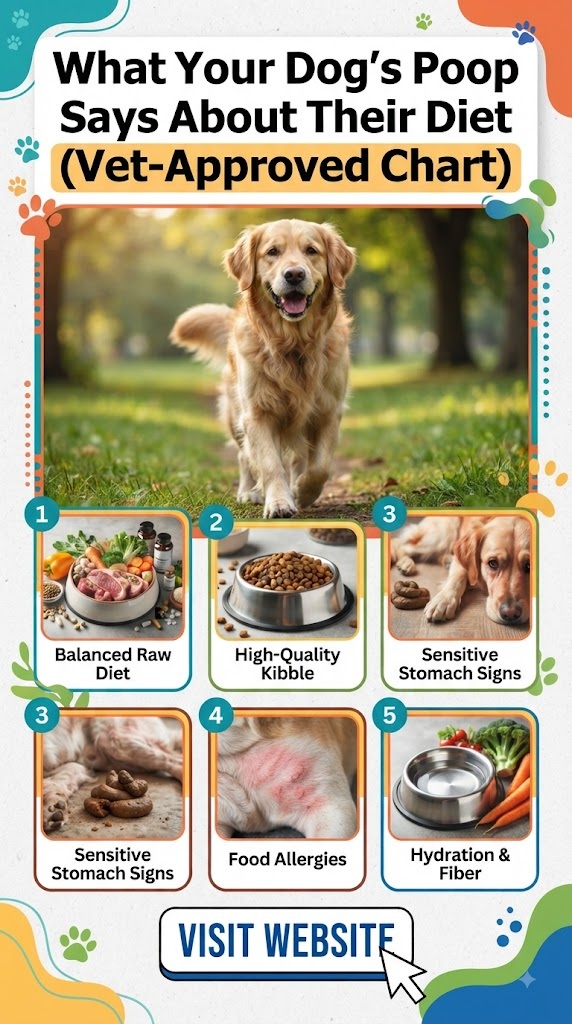
Let’s face it: picking up poop isn’t anyone’s favorite part of pet parenting. But before you bag it and toss it, take a quick glance. That daily deposit is actually a direct report card on your dog’s nutrition, digestion, and overall health.
What’s going into their food bowl dictates everything from the color to the consistency of what comes out the other end. Whether you are troubleshooting a sudden bout of soft stool or simply wondering if their premium kibble is hitting the mark, this vet-approved guide decodes what your dog’s poop is trying to tell you.
The Gold Standard: What Does Healthy Dog Poop Look Like?
Before diving into the warning signs, what does a normal, healthy bowel movement look like? Veterinarians look for four key traits:
- Color: A rich, chocolate-brown shade (similar to milk chocolate).
- Consistency: Firm, moist, and log-shaped. It should hold its shape when picked up and leave little to no residue on the grass.
- Content: Completely free of visible foreign objects, heavy mucus, or parasites.
- Frequency: Typically 1 to 3 times a day, depending on your dog’s size, age, and fiber intake.
If your dog’s stool hits these marks, give yourself—and their diet—a pat on the back. Their digestive system is running smoothly.
The Vet-Approved Dog Poop Color Chart
Color is one of the easiest ways to trace dietary changes or underlying health glitches. Here is what different hues reveal about your dog’s meals:
| Stool Color | What It Usually Means | Dietary & Health Implications |
| Chocolate Brown | Normal & Healthy | Normal bile breakdown; diet is well-tolerated. |
| Yellow or Orange | Food intolerance, rapid transit | Food is moving too fast for bile processing, or a new food ingredient doesn’t agree with them. |
| Green | Grass grazing, rapid transit | Often just means they ate too much grass, but can indicate gallbladder or parasite issues if persistent. |
| Gray or Greasy | Fat malabsorption | Too much fat in the diet, or a potential pancreatic/bile duct issue. |
| Black & Tarry | Bleeding in the upper GI tract | Blood that has been digested turns black. (Seek veterinary care immediately). |
| Red Streaks | Fresh blood in the lower GI tract | Colitis, straining, dietary irritation, or a minor tear. (Contact your vet). |
| White Specks | Parasites or bone fragments | Looks like grains of rice (tapeworms) or undigested bone fragments from a raw diet. |
Decoding Consistency: Shape and Texture
Texture is heavily influenced by hydration levels and how efficiently your dog absorbs nutrients. Vets generally measure consistency on a scale from hard pebbles to liquid diarrhea:
1. Hard, Dry Pellets or Pebbles
- The Cause: Usually points to dehydration, a lack of moisture in the diet, or too much fiber/bone content.
- The Fix: Ensure constant access to fresh water. If feeding a dry kibble, consider adding warm water, bone broth, or transitioning to wet food to boost hydration.
2. Soft, Shapeless, or “Cow Pie” Stool
- The Cause: This is the classic signature of a dietary indiscretion (eating table scraps, raiding the trash), a sudden food transition, or a mild food intolerance. The food is passing through the colon before enough water can be reabsorbed.
- The Fix: Backtrack to what they ate in the last 48 hours. Adding a spoonful of plain, canned pumpkin (not pie filling) can help firm things up due to its soluble fiber content. If it lasts more than 48 hours, consult your vet.
3. Watery Diarrhea
- The Cause: Severe gut irritation, parasites, viral infections, or a severe adverse reaction to a new protein source.
- The Fix: This risks rapid dehydration. Offer a bland diet of boiled chicken and white rice temporarily, and contact your veterinarian if it persists past a day or is accompanied by lethargy.
How Specific Diet Types Impact Dog Poop
Not all dog foods are created equal, and the type of diet you choose directly changes what you find in the yard.
- Commercial Kibble: High-quality kibble with highly digestible proteins usually results in firm, predictable, medium-brown logs. Low-budget kibbles packed with excessive fillers (like corn, wheat, or soy) often produce larger, more frequent volumes of poop because the dog’s body cannot fully absorb the ingredients.
- Raw Diets (BARF): Dogs on raw meat and bone diets typically produce smaller, firmer stools that dry out and turn chalky-white or gray relatively quickly in the sun. However, too much bone content can lead to chalky, difficult-to-pass white pebbles.
- Grain-Free or Alternative Diets: Novel proteins (like venison, kangaroo, or salmon) or alternative starches (like lentils and peas) can slightly shift stool color and odor. If transitioning to a grain-free diet, give the microbiome 7 to 10 days to adjust.
Quick Troubleshooting Guide: When to Call the Vet
While a single weird poop after stealing a piece of cheese is usually no cause for alarm, certain signs require professional medical attention:
- Stool that resembles raspberry jam: This can indicate severe hemorrhagic gastroenteritis (HGE) and requires emergency care.
- Persistent black, tarry stools: Indicates internal bleeding in the stomach or upper digestive tract.
- Stool accompanied by vomiting, fever, or extreme lethargy.
- Worms or moving white spots that look like grains of rice (signaling a parasite load requiring specific dewormers).
The Bottom Line
Your dog’s digestive health starts in their food bowl. By keeping an eye on the color, shape, and consistency of their waste, you can catch nutritional mismatches, food allergies, or early signs of illness before they turn into major vet bills. A healthy poop means a happy pup—so check before you toss!