
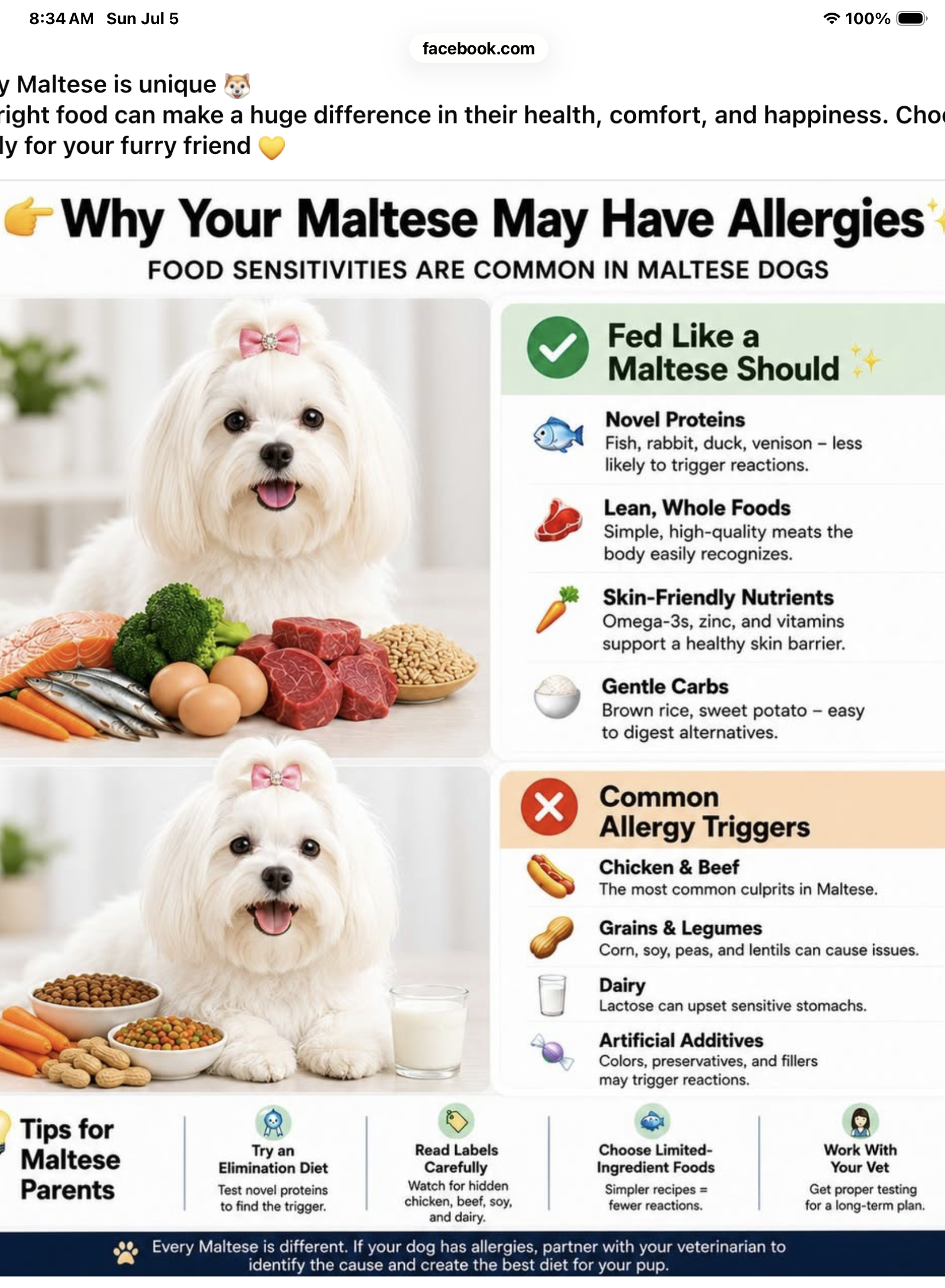
Maltese dogs are known for their beautiful white coats, expressive eyes, and affectionate personalities. But if your little Maltese is constantly scratching, licking their paws, rubbing their face, or developing red, irritated skin, you may wonder whether allergies are to blame.
Allergies can be one reason a dog becomes itchy, but they aren’t the only possibility. Fleas, food reactions, environmental allergens, parasites, bacterial or yeast infections, and other skin conditions can cause similar symptoms. Veterinarians generally diagnose allergic skin disease by looking at the dog’s history and clinical signs while ruling out other causes of itching.
So why might your Maltese have allergies, and how can you recognize the signs?
1. Your Maltese May Be Sensitive to Environmental Allergens
One of the most common reasons dogs develop allergic skin problems is sensitivity to environmental allergens.
Your Maltese may react to things such as:
- Pollen
- Grass
- Mold
- Dust
- Dust mites
- Other environmental substances
These allergies can cause a condition known as atopic dermatitis. Dogs with atopic dermatitis can have a genetic tendency toward allergic skin disease, combined with changes in the skin barrier and immune-system responses to allergens.
Environmental allergies can sometimes be seasonal. For example, you might notice your Maltese becomes itchier during certain parts of the year when pollen levels increase.
Other dogs experience symptoms throughout the year, particularly when indoor allergens such as dust mites or mold are involved.
2. Food Could Be Triggering an Allergic Reaction
Food allergies are another possible cause of persistent itching.
Interestingly, food allergies aren’t necessarily caused by unusual or exotic ingredients. Dogs can develop reactions to ingredients they have eaten previously. Commonly reported food allergens in dogs include beef, dairy products, chicken, wheat, and lamb.
A Maltese with a food allergy may develop:
- Persistent itching
- Paw licking
- Ear problems
- Skin irritation
- Recurrent yeast or bacterial skin infections
- Vomiting
- Diarrhea
- Other gastrointestinal problems
Food-related itching can occur throughout the year rather than following a seasonal pattern
How Do You Know if Food Is Really the Problem?
It’s tempting to simply switch your dog’s food whenever itching appears, but that doesn’t necessarily prove a food allergy.
The reliable approach is a veterinarian-supervised elimination diet followed by a controlled dietary challenge. Improvement during the elimination period followed by a return of symptoms after the original food is reintroduced provides much stronger evidence that food is actually responsible.
Blood and saliva tests marketed for diagnosing food allergies in dogs aren’t considered reliable substitutes for a properly conducted dietary trial.
3. Flea Allergies Can Make Your Maltese Extremely Itchy
Sometimes the culprit isn’t the food bowl or the pollen outside—it’s fleas.
Some dogs are hypersensitive to proteins in flea saliva. Even a relatively small number of flea bites can cause significant itching in a sensitive dog.
Flea allergy dermatitis commonly causes itching and skin lesions around the lower back, tail base, and thighs. Scratching can lead to hair loss, scabs, irritated skin, and secondary infections.
One important point: not seeing fleas doesn’t automatically rule out flea allergy.
If your Maltese is sensitive to flea bites, consistent flea prevention is important. Your veterinarian can recommend an appropriate flea-control plan for your dog and household.
4. Your Maltese’s Skin Barrier May Play a Role
Allergic skin disease isn’t simply about something touching your dog’s skin.
Atopic dermatitis involves a complicated interaction between genetics, the skin barrier, the immune system, allergens, and microorganisms living on the skin. Dogs genetically predisposed to the condition can become sensitized to environmental allergens. (Merck Veterinary Manual)
When the skin barrier isn’t functioning properly, the skin may be more vulnerable to irritation and inflammation.
This can create an uncomfortable cycle:
Allergen exposure → inflammation → itching → scratching/licking → damaged skin → greater risk of infection → even more itching.
That’s one reason persistent allergies are worth discussing with a veterinarian rather than treating the itch alone.
5. Allergies Can Lead to Ear Problems
If your Maltese repeatedly scratches their ears, shakes their head, or develops an unpleasant ear odor, allergies may be contributing.
Environmental and food-related allergic skin disease commonly affects the ears and can predispose dogs to secondary bacterial or yeast ear infections.
A dog may initially have an allergic problem and then develop a secondary infection that makes the itching and discomfort considerably worse.
Signs that your Maltese may have an ear problem include:
- Frequent head shaking
- Scratching the ears
- Redness
- Odor
- Dark or unusual discharge
- Sensitivity when the ears are touched
Because ear infections can have different causes, it’s best to have persistent ear symptoms evaluated rather than repeatedly cleaning the ears at home.
6. Paw Licking Can Be an Allergy Clue
Does your Maltese constantly lick or chew their paws?
Allergies can cause itching around the feet, and excessive licking can further irritate the skin. Dogs with allergic disease may also develop secondary infections that contribute to continued paw discomfort.
You might notice:
- Pink or red skin between the toes
- Constant licking
- Chewing at the feet
- Brown staining of the fur
- Swelling
- An unusual odor
- Tenderness
Paw licking doesn’t automatically mean allergies, however. Parasites, infections, foreign objects, injuries, and other conditions can also cause similar behavior.
7. Your Maltese Could Have a Secondary Yeast or Bacterial Infection
Sometimes the allergy isn’t the entire problem.
A dog may develop allergic inflammation first, then damage the skin through scratching and licking. This can create conditions that allow secondary bacterial or yeast infections to develop.
These infections can cause additional:
- Itching
- Redness
- Hair loss
- Odor
- Scaling
- Crusting
- Discharge
Merck Veterinary Manual notes that secondary bacterial and Malassezia yeast infections can complicate allergic skin disease and contribute to itching.
If your Maltese’s skin suddenly smells different or becomes greasy, crusty, moist, or very irritated, a veterinary examination is a good idea.
8. Grooming Products Could Irritate Sensitive Skin
Not every skin reaction is a true allergy.
Shampoos, fragrances, conditioners, sprays, cleaning products, or other substances can sometimes irritate a dog’s skin.
Because Maltese dogs have a long, fine coat, they may also be exposed to a variety of grooming products.
If you notice that itching repeatedly becomes worse after a particular grooming product, mention this pattern to your veterinarian.
Avoid experimenting with human skincare products or essential oils unless your veterinarian specifically recommends them.
9. Allergies Can Look Similar to Other Skin Problems
This is one of the most important things for Maltese owners to understand.
A dog that is scratching isn’t necessarily allergic.
Veterinarians may need to consider:
- Fleas
- Mites
- Bacterial infections
- Yeast infections
- Food reactions
- Environmental allergies
- Contact irritation
- Hormonal conditions
- Other dermatological disorders
Atopic dermatitis is generally diagnosed using the dog’s history and clinical signs while excluding other causes of itching.
That’s why guessing the cause based on one symptom can lead to the wrong treatment.
Common Signs of Allergies in a Maltese
Keep an eye out for combinations of symptoms rather than just one isolated behavior.
Your Maltese may have an allergic skin problem if you notice:
Skin Signs
- Frequent scratching
- Red skin
- Hair thinning or hair loss
- Scabs
- Repeated hot spots
- Skin darkening
- Thickened skin
- Excessive licking
Paw Signs
- Constant paw licking
- Chewing between toes
- Redness
- Brown saliva staining
- Swollen paws
- Unusual odor
Ear Signs
- Head shaking
- Ear scratching
- Red ears
- Ear odor
- Recurrent ear infections
- Discharge
Other Possible Signs
Food-related allergic reactions can sometimes occur alongside gastrointestinal symptoms such as vomiting or diarrhea.
Why Does My Maltese Keep Scratching but Have No Fleas?
This is a common question.
A dog can itch without visible fleas, and allergies are only one possibility.
Environmental allergies, food reactions, mites, bacterial infections, yeast infections, and other skin conditions can all cause itching.
If the itching is persistent, severe, or accompanied by skin damage, your veterinarian can help determine what is actually happening.
How Your Veterinarian May Investigate Allergies
Diagnosing allergies can take some detective work.
Your veterinarian may ask about:
- When the itching started
- Whether it is seasonal
- Your dog’s diet
- Treats and chews
- Flea prevention
- Grooming products
- Previous skin infections
- Ear problems
- Where your dog is itching
- Whether symptoms improve or worsen at particular times
The veterinarian may also examine the skin and ears and investigate parasites or secondary infections.
For suspected food allergy, a properly controlled elimination diet is particularly important.
What Can Help an Allergic Maltese?
Treatment depends on the cause.
There isn’t one universal allergy treatment that works for every dog.
Depending on the diagnosis, your veterinarian may recommend strategies such as:
- Reliable flea prevention
- Treating secondary infections
- Managing environmental triggers
- A properly conducted elimination diet
- Medications to control itching
- Skin-care measures
- Allergen-specific immunotherapy
- Regular follow-up examinations
Atopic dermatitis is a chronic condition that generally requires ongoing management rather than a one-time cure.
When Should You Take Your Maltese to the Vet?
Make an appointment if your Maltese has persistent or worsening itching, repeated ear infections, significant hair loss, open sores, strong skin odor, or frequent paw licking.
You should also seek veterinary attention if your dog develops facial swelling, difficulty breathing, collapse, or other signs of a potentially severe allergic reaction. Severe allergic reactions can be emergencies.
Don’t give your Maltese human allergy medication unless your veterinarian specifically tells you to do so. The appropriate medication and dose depend on the individual dog and the cause of the symptoms.
Final Thoughts
If your adorable Maltese suddenly seems itchy, don’t automatically assume that food is the problem.
Allergic skin disease can involve environmental allergens, food reactions, flea sensitivity, genetics, skin-barrier problems, and secondary infections. Fleas, infections, parasites, and other conditions can also produce similar symptoms.
The good news is that allergic skin disease can often be managed once the underlying triggers and contributing problems are identified.
Pay attention to when the itching occurs, where your Maltese is itchy, what the skin looks like, whether the ears or paws are involved, and whether symptoms are seasonal or year-round. Those details can give your veterinarian valuable clues.
Most importantly, don’t blame yourself—or your dog’s food—too quickly. Finding the real cause may take some investigation, but getting the right diagnosis is the best first step toward helping your little Maltese feel comfortable again. 🐶🤍
Pinterest SEO Meta Tags
Meta Title:
Why Your Maltese May Have Allergies | Signs, Causes & Tips
Meta Description:
Why is your Maltese scratching, licking paws, or having itchy skin? Learn about common causes of Maltese allergies, including food, fleas, pollen, dust, and skin infections.
Meta Keywords:
Maltese allergies, Maltese dog allergies, Maltese skin allergies, itchy Maltese, Maltese itching, Maltese paw licking, Maltese food allergies, Maltese flea allergy, Maltese skin problems, Maltese ear allergies, dog allergies, small dog allergies, Maltese care, Maltese health, allergic Maltese
Pinterest Pin Title:
Why Your Maltese May Have Allergies 🐶🤍
Pinterest Pin Description:
Is your Maltese constantly scratching, licking their paws, rubbing their face, or dealing with irritated skin? 🐾 Learn the common reasons Maltese dogs may develop allergy symptoms, including environmental allergens, food reactions, flea allergies, yeast and bacterial infections, and sensitive skin. Discover the signs to watch for and when it’s time to call your veterinarian. Save this helpful Maltese allergy guide for later!
Pinterest Hashtags:
#Maltese #MalteseDog #MaltesePuppy #MalteseDogs #MalteseCare #DogAllergies #DogSkinAllergies #ItchyDog #SmallDogCare #DogHealth #DogLovers #PetCare #DogTips #MalteseLife #PetHealth