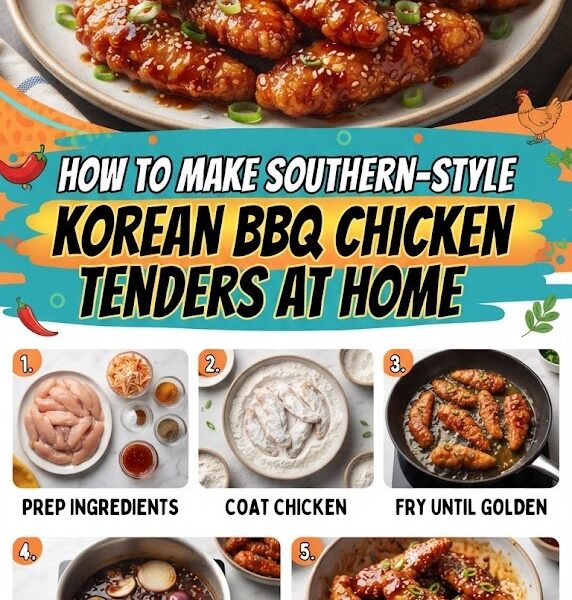
The culinary world is a playground of cultural collisions, and perhaps no two cuisines harmonize as beautifully as Southern American soul food and Korean street food. At the heart of this delicious intersection lies the Southern-Style Korean BBQ Chicken Tender. It is a dish that marries the thick, craggy, buttermilk-soaked crust of the American South with the bold, fermented, sweet-and-spicy “yangnyeom” glaze of Seoul.
If you are looking for the ultimate comfort food that offers a crunch heard across the room and a flavor profile that hits every taste bud—sweet, salty, spicy, and umami—you have come to the right place. This comprehensive guide will walk you through every nuance of creating restaurant-quality Southern-Style Korean BBQ Chicken Tenders in your own kitchen.
The Philosophy of Fusion: Why Southern and Korean Flavors Work
To understand why this dish is so successful, we must look at the commonalities between these two distant regions. Both Southern and Korean cuisines prioritize deep-frying as an art form. Both cultures value the “brine”—whether it’s buttermilk in Georgia or salt and ginger in Busan.
In the South, fried chicken is about the texture of the breading and the juiciness of the meat. In Korea, “KFC” (Korean Fried Chicken) is known for its thin, paper-like, glass-shattering crust and a sauce that coats the chicken without making it soggy. By combining the heavy dredge of Southern cooking with the double-fry technique and gochujang-based sauces of Korea, we create a hybrid that is superior to its parts.
The Anatomy of a Perfect Chicken Tender
Before we heat the oil, we need to understand the components that make a chicken tender “elite.”
- The Cut: We use the pectoralis minor, the small strip of meat tucked under the breast. It is naturally more tender than the breast itself.
- The Brine: Essential for moisture retention.
- The Coating: A mix of starches and flours to ensure a lasting crunch.
- The Fry: Temperature control is everything.
- The Glaze: A balance of fermented chili paste, aromatics, and sweetness.
Essential Ingredients for Southern-Style Korean BBQ Chicken
To achieve the authentic flavor and texture, you cannot cut corners with ingredients. Here is what you need to stock in your pantry.
For the Chicken and Brine:
- 2 lbs Chicken Tenders: Fresh, never frozen, if possible.
- Buttermilk: The acid in buttermilk tenderizes the protein.
- Gochugaru (Korean Red Chili Flakes): Adds a smoky heat to the brine.
- Garlic and Onion Powder: The backbone of Southern seasoning.
- Pickle Juice: A secret Southern tip for an extra tang.
For the “Mega-Crunch” Dredge:
- All-Purpose Flour: Provides the structure.
- Cornstarch or Potato Starch: This is the Korean secret. Starch prevents gluten development, leading to a crispier, less bready crust.
- Baking Powder: Creates tiny air bubbles in the crust for lightness.
- Smoked Paprika: For color and depth.
For the Signature Korean BBQ Sauce:
- Gochujang (Korean Chili Paste): A fermented soybean and chili paste that provides the “soul” of the sauce.
- Soy Sauce: Use a high-quality naturally brewed soy sauce.
- Brown Sugar and Honey: To balance the heat.
- Rice Vinegar: For brightness.
- Toasted Sesame Oil: For an earthy aroma.
- Fresh Ginger and Garlic: Non-negotiables for authentic flavor.
Step 1: The Buttermilk-Gochugaru Brine
The first mistake most home cooks make is frying unseasoned meat. To get that Southern depth, your chicken needs to bathe.
In a large bowl, whisk together 2 cups of buttermilk, 1 tablespoon of Gochugaru, 1 teaspoon of salt, 1 teaspoon of black pepper, and 2 tablespoons of pickle juice. Submerge your chicken tenders in this mixture.
Pro Tip: Let the chicken marinate for at least 4 hours, but ideally 12 to 24 hours. The buttermilk breaks down the fibers, ensuring that even after a double-fry, the chicken remains incredibly succulent.
Step 2: The Art of the Dredge
The “Southern” part of this recipe comes from the thick, craggy crust. To achieve those “nooks and crannies” that hold onto the BBQ sauce, we use a specific dredging technique.
- The Mix: In a shallow pan, combine 1.5 cups of all-purpose flour, 1 cup of potato starch (or cornstarch), 1 tablespoon of baking powder, and your dry spices (paprika, garlic powder, onion powder).
- The “Crumb” Secret: Drizzle 2-3 tablespoons of the buttermilk brine into the dry flour mixture and use a fork to flick it around. This creates small clumps of dough in the flour. When you press the chicken into this, those clumps stick to the surface, creating the ultra-crunchy “Southern” texture.
- The Coating: Take a tender from the brine, let the excess drip off, and press it firmly into the flour mixture. Ensure every inch is covered. Set the coated tenders on a wire rack for 10 minutes before frying. This “resting” period helps the breading adhere so it doesn’t fall off in the oil.
Step 3: Mastering the Double-Fry Technique
Korean fried chicken is famous for being double-fried. The first fry cooks the meat; the second fry renders out the remaining moisture from the crust, making it shatteringly crisp.
The First Fry (The Setting Stage)
Heat a neutral oil (peanut, canola, or vegetable) in a deep pot or Dutch oven to 325°F (163°C). Fry the chicken in batches for about 4-5 minutes. They should be pale golden. Remove and let them rest on a wire rack for at least 5 minutes.
The Second Fry (The Crisping Stage)
Increase the oil temperature to 375°F (190°C). Carefully place the par-fried chicken back into the oil for 2-3 minutes until they turn a deep, golden mahogany. This high-heat blast creates a structural integrity in the crust that can withstand being tossed in sauce without getting soggy.
Step 4: Crafting the Southern-Korean BBQ Glaze
While the chicken rests after its second fry, it’s time to make the sauce. This isn’t your standard American honey-mustard; it’s a complex, simmering pot of umami.
- In a small saucepan, sauté 4 minced garlic cloves and 1 teaspoon of grated ginger in a splash of oil until fragrant.
- Add 3 tablespoons of Gochujang, 3 tablespoons of soy sauce, 1/4 cup of brown sugar, 2 tablespoons of honey, and 1 tablespoon of rice vinegar.
- Let it simmer on low heat until the sugar dissolves and the sauce thickens slightly to a syrupy consistency.
- Remove from heat and stir in 1 teaspoon of toasted sesame oil.
Heat Level Adjustment: If you want it “Nashville Hot” style, add more Gochugaru or a splash of cayenne-heavy hot sauce. For a milder version, increase the honey and brown sugar.
Step 5: The Tossing Ceremony
The final step is the marriage of the chicken and the sauce. You have two options:
- The Full Toss: Place the hot tenders in a large stainless steel bowl, pour the warm sauce over them, and toss quickly. This is how it’s done in traditional Korean spots.
- The Drizzle: If you want to maintain maximum crunch for a long period, drizzle the sauce over the tenders or serve it on the side as a dipping sauce.
Finish the dish with a generous garnish of toasted sesame seeds and thinly sliced green onions. The green onions provide a fresh, sharp contrast to the rich, fried batter.
The Science of the Crunch: Flour vs. Starch
Why do we use a mix of flour and starch?
- All-purpose flour contains protein which develops gluten when wet. This gives the coating its “bread-like” chew and strength.
- Potato/Corn starch is pure starch. It doesn’t develop gluten. When fried, it creates a crisp, delicate lattice that stays crunchy longer than flour alone.
By combining them, we get the “heft” of a Southern tender with the “snap” of Korean chicken.
Equipment Needed for Professional Results
You don’t need a commercial kitchen, but a few tools make a world of difference:
- Instant-Read Thermometer: Essential for checking oil temperature. If the oil is too cold, the chicken becomes greasy. If it’s too hot, the outside burns before the inside cooks.
- Dutch Oven: Cast iron holds heat better than stainless steel, preventing the oil temperature from dropping too sharply when you add the chicken.
- Wire Cooling Rack: Never rest fried chicken on paper towels. Paper towels trap steam, which turns your crispy crust into a soggy mess. A wire rack allows air to circulate around the entire tender.
Perfect Side Dish Pairings
To round out your Southern-Style Korean BBQ feast, consider these sides that bridge the two cultures:
1. Kimchi Coleslaw
Swap the traditional vinegar or mayo dressing in your slaw for one infused with kimchi juice and lime. It provides the acidity needed to cut through the fat of the fried chicken.
2. Honey Butter Biscuits with Gochugaru
The South loves biscuits; Korea loves the “Honey Butter” flavor profile (think Honey Butter Chips). Serve warm buttermilk biscuits brushed with honey, butter, and a pinch of Korean chili flakes.
3. Pickled Daikon Radish (Mu-mari)
In Korea, fried chicken is almost always served with cubed, pickled white radish. The cold, crunchy, sweet-and-sour cubes are the perfect palate cleanser between spicy bites.
4. Macaroni and Cheese with Miso
Elevate your Southern mac and cheese by whisking a tablespoon of white miso into the cheese sauce. The fermented funk of the miso complements the Gochujang in the chicken.
Troubleshooting Common Issues
“My breading is falling off.”
This usually happens for two reasons: the chicken was too wet when it hit the flour, or you didn’t let it rest. Make sure to press the flour firmly into the meat and let it sit for 10 minutes to “glue” itself to the chicken.
“The sauce is too spicy.”
Gochujang brands vary in heat. If yours is too hot, whisk in a tablespoon of butter. The fat in the butter mellows the capsaicin and gives the sauce a glossy, restaurant-style finish.
“The chicken is dry inside.”
You likely overcooked it during the first fry. Remember, the second fry is very fast. Use a meat thermometer to ensure the internal temperature of the chicken reaches 165°F (74°C) and no more.
Healthier Alternatives: Air Fryer and Baking Instructions
If you want the flavor without the deep-frying, you can adapt this recipe for the air fryer.
- The Dredge Change: Instead of a wet buttermilk soak followed by dry flour, use a “Panko” crumb method. Dip the brined chicken in flour, then beaten egg, then a mix of Panko breadcrumbs and potato starch.
- Air Frying: Spray the tenders generously with oil spray (this is crucial for color). Air fry at 400°F (200°C) for 12-15 minutes, flipping halfway through.
- The Sauce: Apply the sauce after air frying. Note that air-fried chicken will not stay crispy as long as deep-fried chicken once sauced, so eat immediately!
Storing and Reheating for Maximum Freshness
Fried chicken is best fresh, but if you have leftovers, do not use the microwave. The microwave will turn the crust into rubber.
- To Store: Keep in an airtight container in the fridge for up to 3 days.
- To Reheat: Place the tenders on a baking sheet in a 375°F (190°C) oven or toaster oven for 8-10 minutes. This will re-crisp the skin and warm the sauce without overcooking the meat.
Why This Recipe is Taking Over the USA
Fusion food is more than just a trend; it represents the modern American palate. In cities like Atlanta, Los Angeles, and New York, the “Southern-Korean” movement is exploding. Restaurants like Heirloom Market BBQ in Atlanta have pioneered this style, showing that the smoky, slow-cooked traditions of the South pair perfectly with the bright, fermented ingredients of Korea.
Making this at home allows you to control the quality of the oil and the balance of the spices. It’s a labor of love, but once you bite through that double-fried crust into the juicy, buttermilk-brined center, all while the Gochujang glaze dances on your tongue, you’ll realize it’s the only way you’ll ever want to eat chicken tenders again.
Final Summary Checklist
- Brine: Buttermilk + Pickle Juice + Gochugaru.
- Dredge: Flour + Potato Starch + Baking Powder + “Drizzle” technique.
- Fry: Double-fry at 325°F then 375°F.
- Sauce: Simmer Gochujang, honey, soy, garlic, and ginger.
- Garnish: Sesame seeds and green onions.
By following this guide, you are not just making dinner; you are mastering a cross-continental culinary technique. Whether you’re hosting a game day party or just craving a high-end comfort meal, these Southern-Style Korean BBQ Chicken Tenders are guaranteed to be the best thing to come out of your kitchen this year.
Enjoy the crunch!