
Dog Weight Guide: How to Add Years to Your Best Friend’s Life
We often hear that “food is love.” In the world of dog ownership, this sentiment is amplified tenfold. Those soulful eyes, the wagging tail at the sound of a kibble bag, and the persistent pawing at the dinner table make it nearly impossible to say no. However, a startling reality is hiding behind those extra treats: canine obesity has become a global epidemic.
According to the Association for Pet Obesity Prevention, over 50% of dogs in the United States are classified as overweight or obese. While a “chonky” dog might look cute in an Instagram reel, the physiological reality is far more somber. Keeping your dog at a healthy weight is quite literally the single most effective way to extend their lifespan and ensure their golden years are spent in comfort rather than pain.
This comprehensive guide will walk you through everything you need to know about canine weight management—from the science of metabolism to the psychology of the “beg,” and practical steps to ensure your dog stays fit, trim, and thriving.
1. Why Weight Matters: The Science of Longevity
Before we dive into the “how,” we must understand the “why.” Carrying excess weight isn’t just a cosmetic issue; it is a chronic, low-grade inflammatory state.
The “Purina Lifespan Study”
One of the most famous studies in veterinary medicine followed 48 Labrador Retrievers for their entire lives. The dogs were paired up; one was fed a standard diet, while the other was fed 25% less. The results were staggering. The lean dogs lived, on average, 1.8 years longer than their overweight counterparts. For a dog, two extra years is an eternity of belly rubs and games of fetch.
Health Risks of Excess Weight
- Osteoarthritis: Extra weight puts immense pressure on joints. Fat tissue also secretes inflammatory hormones (adipokines) that actively destroy joint cartilage.
- Type 2 Diabetes: While less common in dogs than cats, obesity leads to insulin resistance.
- Cardiovascular Strain: The heart has to work significantly harder to pump blood through a larger body mass.
- Respiratory Distress: Overweight dogs often struggle to breathe, especially in heat or during exercise.
- Increased Cancer Risk: Chronic inflammation is a known precursor to various canine malignancies.
2. The Eye Test: How to Determine Your Dog’s Body Condition Score (BCS)
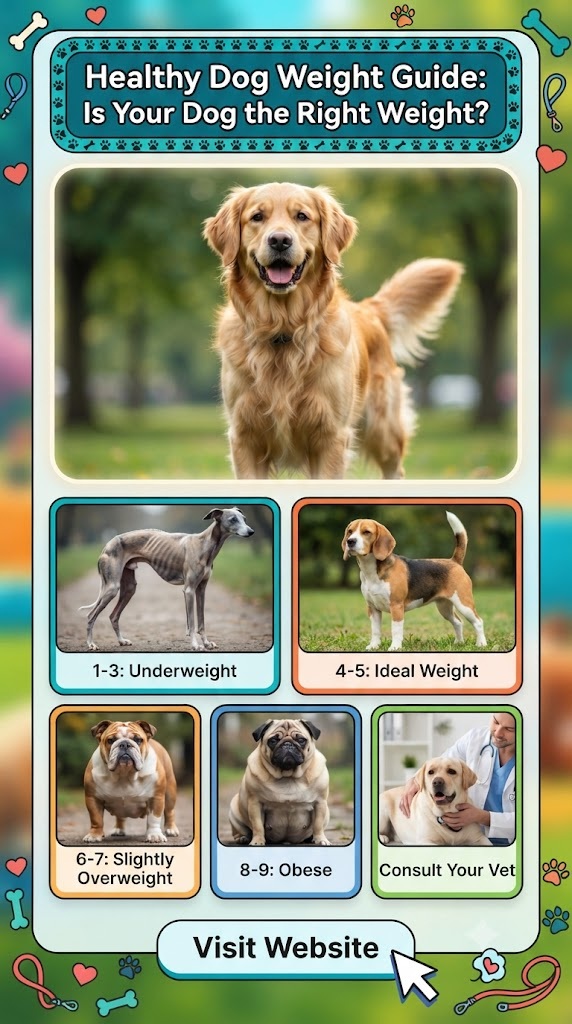
The number on the scale tells only half the story. A 30-pound Bulldog and a 30-pound Whippet are vastly different animals. Veterinarians use the Body Condition Score (BCS), usually on a scale of 1 to 9, to determine if a dog is at an ideal weight.
The 1–9 Scale Breakdown
- 1–3 (Underweight): Ribs, spine, and pelvic bones are easily visible from a distance. There is no palpable fat. This is often seen in rescues or dogs with underlying metabolic issues.
- 4–5 (Ideal): Ribs are easily felt but not visible. When viewed from above, the dog has an “hourglass” figure (a clear waist). From the side, there is a visible “abdominal tuck.”
- 6–7 (Overweight): Ribs are difficult to feel under a layer of fat. The waist is barely visible from above, and the abdominal tuck is absent or slight.
- 8–9 (Obese): Massive fat deposits over the chest, spine, and base of the tail. The abdomen may bulge outward (pendulous).
The “Knuckle Test” (A Quick Home Hack)
If you aren’t sure what you’re feeling for, use your hand as a guide:
- Underweight: Feel your knuckles while making a fist. If your dog’s ribs feel like that, they are too thin.
- Ideal Weight: Feel the back of your hand. If your dog’s ribs feel like the bones on the back of your hand (covered by a thin layer of skin/flesh), they are perfect.
- Overweight: Feel your palm. If the ribs are buried and feel like your palm, your dog needs a diet.
3. Calorie Counting: The Math of Maintenance
Feeding “by the bag” is one of the most common mistakes owners make. The feeding guidelines on the back of dog food bags are often generalized and frequently over-estimate how much an indoor, sedentary dog actually needs.
Calculating Resting Energy Requirements (RER)
To find your dog’s baseline, use this formula (for adult dogs): 70 x (body weight in kg)^0.75 = RER calories per day.
Example: A 20kg (44lb) dog.
- 20 raised to the power of 0.75 is approximately 9.45.
- 70 x 9.45 = 661 calories/day.
Factors That Change the Formula
- Neutered/Spayed: Metabolism drops by roughly 20-30% after the procedure.
- Activity Level: A working Border Collie needs significantly more than a couch-potato Pug.
- Age: Seniors have slower metabolisms and require fewer calories but higher quality protein.
4. The “Treat Trap”: Hidden Calories in Your Dog’s Day
We often forget that treats have calories. If you give your 20-pound dog one ounce of cheddar cheese, it’s the caloric equivalent of a human eating two double cheeseburgers.
The 10% Rule
Treats should never make up more than 10% of your dog’s daily caloric intake. If your dog is on a 600-calorie diet, they only have 60 “bonus” calories to spend.
High-Value, Low-Calorie Alternatives
Instead of processed, store-bought “biscuits,” try these:
- Green Beans (Fresh or Frozen): High fiber, very low calorie.
- Carrots: Great for crunching and dental health.
- Blueberries: Packed with antioxidants.
- Cucumber: Mostly water, great for summer.
- Air-Popped Popcorn: (No salt, no butter).
5. Nutrition Strategies for Weight Loss
If your vet has confirmed your dog needs to lose weight, don’t panic. Weight loss should be slow and steady—aiming for 1% to 2% of total body weight loss per week.
Stop Using a “Scoop”
Standard measuring cups are notoriously inaccurate. A “heaping” cup can contain 20% more calories than a “level” cup. Use a digital kitchen scale to weigh your dog’s food in grams. This ensures consistency every single day.
The “Bulk Up” Method
If your dog acts like they are starving on a reduced-calorie diet, you can “volume-fill” their bowl. Add unsalted, steamed green beans or canned pumpkin (not pie filling!) to their meal. This adds fiber and weight to the food, making the dog feel full without adding significant calories.
Puzzle Feeders and Slow Bowls
Weight loss isn’t just about what they eat, but how they eat. Using a Snuffle Mat or a Kong Wobbler forces the dog to work for their food. This slows down ingestion, prevents “scarf and barf,” and provides mental stimulation that can reduce food-seeking behaviors.
6. Exercise: Beyond the Boring Walk
Walking is the foundation of canine fitness, but to burn fat and build muscle, we need to diversify.
Interval Training
Instead of a steady-state 20-minute walk, try intervals. Walk for two minutes, jog for 30 seconds, then walk for another two minutes. This spikes the heart rate and increases metabolic burn.
Nose Work and Mental Stimulation
Did you know 15 minutes of intense sniffing is as exhausting for a dog as an hour of walking? Use “find it” games to get your dog moving around the house or yard.
Swimming: The Low-Impact Miracle
For obese dogs or seniors with arthritis, swimming is the gold standard. It allows for a full-range-of-motion cardiovascular workout without putting any stress on the joints.
Indoor Agility
You don’t need a professional course. Use cushions for them to climb over, broomsticks to step over (cavaletti rails), and chairs to weave through. This builds “proprioception”—the dog’s awareness of their own body.
7. Life Stages and Weight Management
A dog’s nutritional needs shift dramatically throughout their life.
The Puppy Phase
Puppies need calorie-dense food to support growth, but “more” isn’t always “better.” Large breed puppies (like Great Danes or Labs) must grow slowly. Growing too fast can lead to developmental orthopedic diseases like hip dysplasia. Keep puppies lean; you should be able to feel their ribs easily.
The Spay/Neuter Shift
Once a dog is fixed, their hormonal profile changes. Their urge to roam decreases, and their metabolism slows down. Most owners fail to adjust the food intake post-surgery, leading to “the spay sway” (weight gain in the midsection). Reduce portions by 10% immediately following the procedure and monitor closely.
The Senior Years
Seniors often lose muscle mass (sarcopenia) while gaining fat. They need “Senior” formulas that are lower in calories but higher in high-quality, easily digestible protein to maintain muscle. Adding Omega-3 fatty acids (fish oil) can help manage the inflammation that comes with both age and weight.
8. Breed-Specific Considerations
Genetics play a massive role in how dogs carry weight.
- The “Thrifty Gene” Breeds: Beagles, Labrador Retrievers, and Dachshunds are genetically predisposed to seeking out food. Labs, in particular, often have a mutation in the POMC gene which controls hunger, meaning they literally never feel “full.”
- Deep-Chested Breeds: Boxers and Dobermans may look thin even when they are at a healthy weight. Their abdominal tuck is naturally more dramatic.
- Double-Coated Breeds: Newfoundlands and Huskies are hard to judge by eye because of their fur. You must use your hands to feel the ribs through the “carpet” of hair.
9. The Psychology of the Beg: How to Say No
We are hardwired to respond to our dogs’ requests for food. It releases oxytocin in both species. To successfully manage your dog’s weight, you must retrain yourself.
Identifying “False Hunger”
Just because a dog is in the kitchen doesn’t mean they are hungry. They might be bored, anxious, or simply following a routine. When your dog begs:
- Offer Water: Sometimes they are just thirsty.
- Offer Interaction: Try a 2-minute brushing session or a quick game of tug.
- Use a Command: Give them a job to do, like “Go to your mat.” This breaks the cycle of the beg.
The “Table Scraps” Reality
Sharing your pizza crust or the end of a sandwich is a slippery slope. If you must share “human food,” stick to plain, boiled chicken or pieces of apple. Avoid anything with onions, garlic, or excessive salt.
10. When It’s Not Just Food: Medical Causes of Weight Gain
If your dog is eating a strict diet and still gaining weight, it’s time for a trip to the vet. Several medical conditions can cause weight gain or a “pot-bellied” appearance:
- Hypothyroidism: Common in medium-to-large breeds. The thyroid gland doesn’t produce enough hormones, causing the metabolism to grind to a halt.
- Cushing’s Disease (Hyperadrenocorticism): Overproduction of cortisol leads to muscle wasting in the legs and a distended, fatty abdomen.
- Fluid Retention: Heart or liver issues can cause the abdomen to fill with fluid (ascites), which can look like fat.
11. Creating a Weight Loss Plan: Step-by-Step
If you’ve realized your pup is more “fluff” than “tough,” follow this roadmap:
- Consult Your Vet: Get a baseline weight and a blood panel to rule out medical issues.
- Pick a Target Weight: Based on breed standards and BCS.
- Switch to a Weight Management Formula: These foods are lower in fat and higher in fiber, allowing the dog to eat a larger volume of food for fewer calories.
- Eliminate Free-Feeding: If you leave food out all day, stop. Move to two or three scheduled feedings.
- Track Everything: Keep a “food diary” for a week. You’ll be surprised how many treats other family members are sneaking them.
- Monthly Weigh-Ins: Most pet stores have scales you can use for free. Track the progress.
12. Help! My Dog is Underweight
While obesity is more common, being underweight is also a concern. This is often seen in high-anxiety dogs, working dogs, or those with malabsorption issues.
How to Help Your Dog Gain Weight
- High-Calorie Toppers: Add a spoonful of plain Greek yogurt, a cooked egg, or satin balls (a specific high-fat recipe for weight gain).
- Puppy Food: Transitioning an underweight adult to puppy food for a few weeks can provide the extra caloric density they need.
- Small, Frequent Meals: Instead of two large meals, try four small ones to prevent digestive upset.
- Check for Parasites: Worms are a leading cause of weight loss in dogs. Ensure their deworming schedule is up to date.
13. The Emotional Reward of a Fit Dog
When your dog reaches their ideal weight, you will notice a transformation that goes beyond the physical.
- Energy: They will have a “puppy-like” spark again.
- Mood: Chronic pain from heavy joints often manifests as grumpiness or lethargy. As the weight comes off, the “zoomies” often return.
- Mobility: You’ll see them jumping onto the couch or into the car with ease.
The journey to a healthy weight isn’t about deprivation; it’s about liberation. It’s about giving your dog the freedom to move without pain and the opportunity to stay by your side for as many years as possible.
14. Summary Checklist for Dog Owners
To keep your dog in peak condition, remember these key points:
- Feel the ribs once a week. You should always be able to find them easily.
- Measure by weight, not volume. Use a scale for the kibble.
- Treats are 10% or less. Use veggies for the rest.
- Keep them moving. Vary your exercise routines to keep their muscles challenged.
- Watch the waistline. If the “hourglass” disappears, it’s time to trim the portions.
By taking control of your dog’s weight, you are taking control of their health. You are their guardian, their provider, and their best chance at a long, happy life. Put down the extra biscuit, pick up the leash, and start the journey to a healthier, happier hound today.
Frequently Asked Questions (FAQ)
Q: Can I just feed my dog less of their regular food? A: You can, but be careful. Simply cutting a portion in half can lead to nutrient deficiencies. It is better to use a dedicated “weight loss” kibble that is formulated to be nutrient-dense but calorie-light.
Q: My dog is always hungry. Is it okay to let them beg? A: Begging is often a learned behavior rather than an expression of true hunger. Stand firm! If you give in, you are reinforcing the behavior. Use low-cal veggies if you must give something.
Q: How fast should my dog lose weight? A: A safe rate is 1% to 2% of their current body weight per week. For a 50lb dog, that is 0.5 to 1lb per week. Rapid weight loss can be dangerous and lead to liver issues.
Q: Does my dog’s breed affect their weight? A: Absolutely. Some breeds have much lower metabolic rates than others. Always research your specific breed’s ideal weight range and body shape.
Q: Is “grain-free” better for weight loss? A: Not necessarily. “Grain-free” often replaces grains with potatoes or legumes, which can be just as high in calories. Focus on the total calorie count and the protein-to-fat ratio instead.