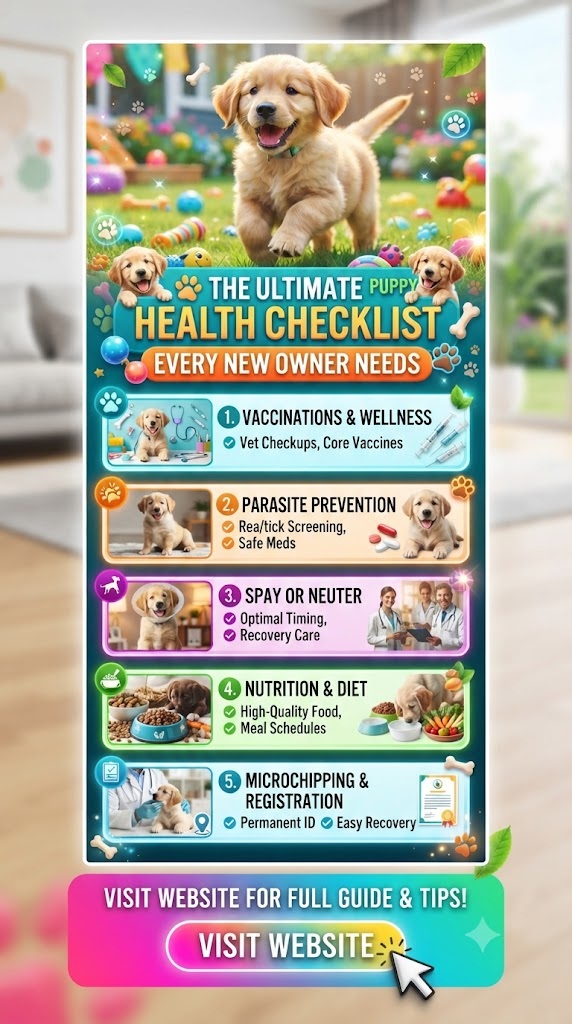
The Ultimate Puppy Health Checklist: The Comprehensive Roadmap to Raising a Resilient, Happy Dog
Bringing a new puppy into your home is a whirlwind of wagging tails, clumsy paws, and the sweet scent of puppy breath. However, beneath the adorable surface lies a significant responsibility. The first year of a dog’s life is the most critical period for their physical and psychological development. Every decision you make—from the food you put in their bowl to the timing of their vaccinations—sets the foundation for their long-term longevity.
This guide is designed to be the only resource you’ll ever need to navigate the complexities of puppy health. We will cover everything from the physiological milestones to the subtle behavioral cues that indicate your puppy is thriving (or needs help).
1. The Pre-Arrival Health Audit: Setting the Stage
Before your puppy even steps paw into your home, their health journey begins. A “puppy-proofed” home is the first step in preventative medicine.
- Toxic Plant Removal: Check your garden and indoor pots for Sago Palms, Lilies, Azaleas, and Ivy. These can cause everything from mild stomach upset to total liver failure.
- The “Knee-High” Perspective: Get down on all fours. If there are loose wires, small plastic toys, or cleaning supplies within reach, they are potential emergency vet visits waiting to happen.
- Essential Gear Check:
- Stainless Steel Bowls: Unlike plastic, they don’t harbor bacteria that cause “canine acne” or infections.
- Adjustable Harnesses: Puppies grow fast. A harness that puts pressure on the chest rather than the throat protects the delicate trachea.
- High-Quality Crate: Crating isn’t just for potty training; it’s a “den” that prevents them from eating dangerous items when unsupervised.
2. The First 24 Hours: Observation and Acclimation
The transition from a breeder or shelter to a new home is incredibly stressful. Stress weakens the immune system, making puppies more susceptible to opportunistic infections.
The Baseline Check
Once home, perform a “head-to-tail” scan:
- Eyes: Should be clear and bright. Any yellow or green discharge requires a vet visit.
- Nose: Should be moist but not runny.
- Gums: Should be bubblegum pink. If they are pale or white, it could indicate anemia or parasites.
- Hydration: Gently pinch the skin between the shoulder blades. It should snap back instantly. If it stays tented, the puppy is dehydrated.
3. The Veterinary Timeline: Weeks 6 to 16
The “Immunity Gap” is a dangerous period between when maternal antibodies (from the mother’s milk) fade and the puppy’s own immune system takes over through vaccinations.
Core Vaccinations (Non-Negotiable)
- DHPP: This “4-in-1” vaccine protects against Distemper, Hepatitis, Parainfluenza, and Parvovirus. Parvo is a highly contagious, often fatal virus that survives in the soil for years.
- Rabies: Usually administered around 12–16 weeks. It is legally required in most jurisdictions because it is a zoonotic disease (can be passed to humans).
Non-Core Vaccinations (Based on Lifestyle)
- Bordetella (Kennel Cough): Essential if your puppy will go to daycare, grooming, or puppy classes.
- Leptospirosis: A bacterial infection spread through the urine of wildlife. If you live near woods or water, this is vital.
- Lyme Disease: Necessary in tick-heavy regions.
The Deworming Protocol
Almost all puppies are born with roundworms or hookworms passed from the mother. A standard checklist includes:
- Stool Sample: Bring a fresh sample to every vet visit in the first four months.
- Monthly Preventatives: Starting at 8 weeks, puppies should be on a monthly pill or topical that prevents heartworms, fleas, and ticks.
4. Puppy Nutrition: Fueling the Growth Spurt
Puppies don’t just need more food; they need different food. Their skeletal systems are developing rapidly, and the wrong calcium-to-phosphorus ratio can lead to permanent joint deformities, especially in large breeds.
Key Components of Puppy Kibble
- DHA (Docosahexaenoic Acid): An omega-3 fatty acid found in mother’s milk. It is essential for brain and eye development.
- High Protein Content: Puppies need amino acids to build muscle and tissue.
- Caloric Density: Puppies burn energy at twice the rate of adult dogs.
Feeding Schedule
- 8–12 Weeks: 4 meals a day (to prevent hypoglycemia, especially in small breeds).
- 3–6 Months: 3 meals a day.
- 6 Months+: 2 meals a day.
Foods to Avoid (The “Never” List)
- Xylitol (Birch Sugar): Found in sugar-free gum and some peanut butters. It is instantly lethal.
- Grapes and Raisins: Can cause acute kidney failure.
- Onions and Garlic: Damage red blood cells.
- Cooked Bones: They splinter and can perforate the intestines.
5. Dental Health: Beyond the Puppy Breath
Puppies have 28 deciduous (baby) teeth that begin to fall out around 4 months of age, replaced by 42 adult teeth.
The Teething Checklist
- Frozen Carrots: A healthy way to soothe inflamed gums.
- Rubber Chew Toys: Avoid hard nylon or real bones, which can fracture fragile puppy teeth.
- The “Retained Puppy Tooth” Check: Sometimes a baby tooth doesn’t fall out when the adult tooth emerges. This can cause overcrowding and infection. If you see “shark teeth,” consult your vet.
- Brushing Habituation: Start “brushing” their teeth with your finger and dog-safe toothpaste now. By the time they are adults, they will accept the routine, saving you thousands in dental cleanings later.
6. Socialization as Preventative Medicine
Behavioral issues are the leading cause of dogs being surrendered to shelters. In the veterinary world, socialization is considered part of “behavioral health.”
The Critical Window
The socialization window closes around 16 weeks. During this time, your puppy’s brain is like a sponge.
- The Rule of 7s: By the time a puppy is 12 weeks old, they should have walked on 7 different surfaces, played with 7 different types of toys, and met 7 different types of people (kids, people in hats, people with umbrellas).
- Positive Reinforcement: Health isn’t just physical. A puppy that is confident and low-stress has a stronger immune system than one constantly living in a state of cortisol-spiked fear.
7. The Great Debate: Spaying and Neutering
The timing of “fixing” your puppy has shifted in recent years based on new orthopedic research.
- Small Breeds: Generally safe to spay or neuter around 6 months.
- Large and Giant Breeds (Labs, Goldens, Danes): Many vets now recommend waiting until the growth plates have closed (12–18 months). Early neutering can remove hormones necessary for bone density and joint alignment, potentially leading to hip dysplasia or certain cancers.
- Benefits: Reduces the risk of mammary tumors in females and testicular cancer in males, and eliminates the risk of pyometra (a life-threatening uterine infection).
8. Exercise and Bone Development
It is a common mistake to take a young puppy on a long run. A puppy’s bones are not solid; they have “growth plates” made of soft cartilage.
The 5-Minute Rule
A good rule of thumb is 5 minutes of formal exercise (like walking on a leash) per month of age, up to twice a day.
- 3 Months Old: 15 minutes of walking.
- 6 Months Old: 30 minutes of walking.
- Avoid High Impact: No jumping from high surfaces (like the back of an SUV) or long-distance running on pavement until they are at least 12–15 months old.
9. Grooming and Hygiene Checklist
Grooming isn’t just about looking good; it’s a vital health inspection.
- Ears: Check weekly for a “yeasty” smell or dark discharge. This is a sign of ear mites or infection.
- Nails: If you can hear them clicking on the floor, they are too long. Long nails can cause the toes to splay and lead to arthritis.
- Skin: Look for “hot spots” (red, inflamed patches) or “flea dirt” (black specks that turn red when wet).
- The Sanitary Trim: Keeping the fur around the “private areas” short prevents UTIs and fecal matting.
10. Common Puppy Ailments: When to Call the Vet
Puppies can go from “perfectly fine” to “critically ill” in a matter of hours.
Red Alert Symptoms (Emergency Room Immediately)
- Bloody Diarrhea: A primary symptom of Parvovirus.
- Non-Stop Vomiting: Can lead to rapid dehydration or indicate a foreign body obstruction.
- Lethargy: If your puppy won’t get up for a treat or play, something is wrong.
- Swollen Face or Hives: Likely an allergic reaction (often to a bee sting or vaccine).
Yellow Alert Symptoms (Call the Vet Today)
- The “Honking” Cough: Could be Kennel Cough.
- Scooting: Usually indicates full anal sacs or intestinal parasites.
- Excessive Scratching: Could be an early sign of environmental or food allergies.
11. The Puppy First Aid Kit
Every puppy parent should have a dedicated medical bag.
- Styptic Powder: To stop bleeding if you cut a nail too short.
- Self-Adhesive Bandages: They stick to themselves, not the fur.
- Saline Solution: For flushing out debris from eyes.
- Hydrogen Peroxide (3%): To induce vomiting—ONLY under the direct instruction of a vet or poison control.
- Digital Thermometer: A dog’s normal temp is 101.0 to 102.5°F.
- Pet Poison Control Number: Keep it on the fridge.
12. Mental Health: Preventing the “Puppy Blues”
A healthy puppy needs a healthy owner. The “Puppy Blues” is a real phenomenon where new owners feel overwhelmed, anxious, or regretful.
- Enforced Naps: Much like human toddlers, puppies get “cranky” and bitey when they are overtired. They need 18–20 hours of sleep a day. If your puppy is acting out, put them in their crate for a nap.
- Mental Stimulation: 15 minutes of sniffing (a “sniffari”) or a puzzle toy is as tiring as an hour-long walk. This keeps their brain healthy and prevents destructive behaviors.
13. Weight Management: The Body Condition Score
Obesity is the #1 preventable health issue in dogs. It starts in puppyhood. You should be able to feel your puppy’s ribs but not see them. From a bird’s-eye view, they should have a visible “waist” behind the ribs. If they look like a cylinder, it’s time to talk to the vet about portion control.
Summary Checklist: The “At-A-Glance” Guide
- Daily: Check poop consistency, monitor water intake, 2–3 training sessions.
- Weekly: Check ears, brush teeth, weigh them (to adjust food amounts).
- Monthly: Heartworm/Flea/Tick preventative, nail trim.
- 6 Months: Discuss spay/neuter timing with your vet, transition to “Junior” or Adult food (depending on breed).
- Annually: Comprehensive blood work and booster shots.
Raising a puppy is a marathon, not a sprint. By checking these boxes, you aren’t just preventing illness; you are ensuring that your puppy grows into a dog that is vibrant, resilient, and by your side for many years to come. Remember: an ounce of prevention in the first six months is worth ten pounds of cure in the years that follow.