
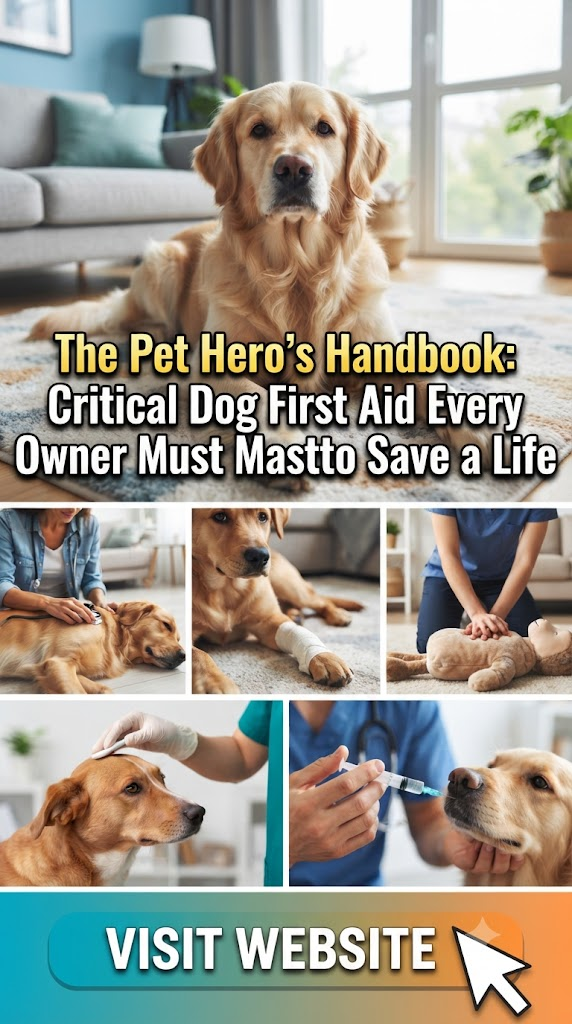
The Pet Hero’s Handbook: Critical Dog First Aid Every Owner Must Master to Save a Life
Imagine this: It’s a sunny afternoon at the park. Your dog is chasing a ball, the picture of health and happiness. Suddenly, they let out a sharp yelp, begin to cough uncontrollably, and collapse. In that fleeting second, the world slows down. Panic rises in your throat. Do you know what to do next?
For most dog owners, the answer is a terrifying “no.”
We spend hours researching the best grain-free kibble and the sturdiest harnesses, but we often overlook the most vital skill of all: Emergency First Aid. When a crisis strikes, the minutes—sometimes seconds—before you reach a veterinarian are the difference between a tragedy and a miraculous recovery.
This is the ultimate, comprehensive guide to becoming your dog’s first responder. From performing CPR to identifying the silent signs of “Bloat,” here is everything you need to know to protect your best friend.
1. The Ultimate Dog First Aid Kit: Your Tactical Gear
Before an emergency happens, you need the right tools. A kitchen cabinet full of human Band-Aids won’t suffice. You need a dedicated, portable canine first aid kit.
The Essentials List:
- Absorbent Gauze Pads & Rolls: For cleaning wounds and controlling bleeding.
- Adhesive Tape: Specifically “vet wrap” or cohesive bandage that sticks to itself but not to fur.
- Digital Thermometer: A dog’s normal temperature is 101°F to 102.5°F. You will need to take this rectally for an accurate reading.
- Hydrogen Peroxide (3%): To induce vomiting—only if directed by a veterinarian or poison control.
- Sterile Saline Solution: For flushing out debris from eyes or wounds.
- Blunt-Ended Scissors: To cut away matted fur or bandages without nicking the skin.
- Tweezers & Tick Removal Tool: Essential for removing stingers or parasites.
- A Muzzle: Even the gentlest dog may bite when in extreme pain. A soft muzzle or a roll of gauze can prevent injuries to the rescuer.
- A Sturdy Blanket: To use as a stretcher or to treat for shock.
- Emergency Contact List: Include your vet, the nearest 24-hour emergency clinic, and the Pet Poison Helpline.
2. The Emergency ABCs: Airway, Breathing, and Circulation
In a collapse or trauma situation, the first thing you must do is stabilize the dog using the ABC method.
Airway
Check if anything is obstructing the throat. Open the mouth, pull the tongue forward (be careful of teeth), and look for foreign objects. If you see something, try to sweep it out with your finger, but be wary of pushing it deeper.
Breathing
Look for the rise and fall of the chest. Listen for air movement at the nose. If the dog isn’t breathing but has a pulse, you may need to perform “Rescue Breathing” (closing the dog’s mouth and blowing into their nose).
Circulation
Check for a pulse. The easiest place to find a dog’s pulse is the femoral artery, located high on the inner thigh where the leg meets the body. Press firmly but gently. If there is no pulse, CPR is required immediately.
3. Canine CPR: A Step-by-Step Guide
Cardiopulmonary Resuscitation (CPR) is a last-resort effort to save a dog whose heart has stopped.
Step 1: Position the Dog
Place the dog on their right side on a firm surface.
Step 2: Chest Compressions
- For Large/Medium Dogs: Place your hands over the widest part of the ribcage.
- For Small Dogs/Cats: Wrap one hand around the chest, with your thumb on one side and fingers on the other, or use two fingers directly over the heart.
- For Deep-Chested Dogs (like Greyhounds): Compress directly over the heart.
Step 3: The Rhythm
Aim for 100 to 120 compressions per minute. A helpful trick is to follow the beat of the song “Stayin’ Alive” by the Bee Gees. You should compress the chest by 1/3 to 1/2 of its width.
Step 4: Combine with Breaths
After 30 compressions, deliver two rescue breaths. Close the dog’s mouth tightly with your hands and blow into the nose until you see the chest rise. Repeat the 30:2 cycle until the dog breathes on their own or you reach the vet.
4. Choking: The “External Extraction” Maneuver
Choking is one of the most common household emergencies. Whether it’s a small ball or a piece of hard chew, an obstructed airway is a time-critical crisis.
Signs of Choking:
- Pawing at the mouth.
- Gasping or wheezing.
- Blue-tinged tongue or gums (Cyanosis).
What to Do:
- The Finger Sweep: If the object is visible, try to flick it out. Do not push!
- The Doggy Heimlich:
- For Small Dogs: Hold the dog against your chest, spine to your belly. Find the soft spot under the ribs and push upward and forward five times.
- For Large Dogs: If the dog is standing, wrap your arms around their waist. Make a fist and place it in the soft spot below the ribcage. Thrust upward and forward.
- If the Dog is Recumbent: Lay them on their side and use the palms of your hands to push the abdomen just below the ribs toward the head.
5. Controlling Heavy Bleeding
Severe bleeding from a laceration or puncture must be addressed before transporting the dog to the vet.
- Direct Pressure: Use a clean cloth or gauze and press firmly on the wound. Do not lift the gauze to check if it has stopped; if it soaks through, add more gauze on top.
- Elevation: If the wound is on a limb, try to keep the limb elevated above the level of the heart to slow the blood flow.
- Pressure Points: If direct pressure fails, apply pressure to the “pressure point” (the femoral artery for back legs, or the brachial artery in the “armpit” for front legs).
- Tourniquets: Use these only as a last resort for life-threatening limb bleeding, as they can lead to amputation. Use a wide strip of cloth and note the exact time it was applied.
6. Toxic Ingestion: The Silent Killers in Your Kitchen
Dogs are scavengers, but their curiosity can lead to fatal poisoning.
Common Household Toxins:
- Xylitol: An artificial sweetener found in sugar-free gum and some peanut butters. It causes a massive insulin spike and liver failure.
- Chocolate/Caffeine: Contains theobromine, which affects the heart and nervous system.
- Grapes and Raisins: Can cause sudden, acute kidney failure.
- Onions and Garlic: Damage red blood cells.
- Human Medications: Especially Ibuprofen (Advil) and Acetaminophen (Tylenol), which are highly toxic to dogs.
The Protocol:
If you suspect your dog has eaten something toxic, call a professional immediately. Do not induce vomiting unless a vet tells you to. If they ingest a caustic substance (like bleach), vomiting could burn the esophagus a second time on the way up.
7. Heatstroke: More Than Just “Being Hot”
Hyperthermia is an emergency where the dog’s body temperature rises above 104°F, often leading to organ failure.
Symptoms:
- Excessive, thick drooling.
- Bright red or purple gums.
- Vomiting or bloody diarrhea.
- Unsteadiness or “drunken” walking.
Critical Action:
- Move to shade/AC.
- Cooling: Use tepid (room temperature) water. Do not use ice-cold water, as this causes the blood vessels to constrict, actually trapping heat in the core organs.
- Wet the Pads: Apply cool water to the paws and groin area.
- Fan them: Use air movement to facilitate evaporative cooling.
- Stop cooling at 103°F: If you continue cooling past this point, you risk hypothermia.
8. Bloat (GDV): The #1 Killer of Large Dogs
Gastric Dilatation-Volvulus (GDV), commonly known as Bloat, is a condition where the stomach fills with gas and kemudian twists on itself, cutting off blood flow.
The Warning Signs (Learn These by Heart):
- Unsuccessful attempts to vomit (dry heaving).
- A distended, hard “drum-like” abdomen.
- Restlessness and pacing.
- Hunched back.
Bloat is a “Go NOW” emergency. There is no home remedy for bloat. If you see dry heaving and a swollen belly, you have very little time. Get to an emergency surgeon immediately.
9. Handling Seizures
Seeing your dog have a seizure is one of the most distressing experiences for an owner.
Do’s:
- Clear the area: Move furniture or sharp objects away so the dog doesn’t hit them.
- Keep them cool: Seizures generate a lot of body heat.
- Time it: Use your phone to record the duration. This information is vital for the vet.
- Speak softly: Comfort them from a distance.
Don’ts:
- Do NOT put your hands in their mouth: Dogs do not “swallow their tongues.” You will likely be bitten by an involuntary jaw snap.
- Do NOT restrain them: Let the seizure run its course unless it lasts more than 5 minutes (which is a medical emergency called Status Epilepticus).
10. Fractures and Spinal Injuries
If your dog is hit by a car or falls from a height, they may have broken bones or spinal damage.
Transporting an Injured Dog:
- The Muzzle: Always muzzle an injured dog before moving them, unless they are vomiting.
- The Stretcher: Use a rigid board or a heavy blanket as a sling to keep the spine as straight as possible.
- Immobilization: If a limb is clearly broken, do not try to “set” it. Wrap it gently in a towel to prevent further movement during the car ride.
11. Insect Bites and Allergic Reactions
From bee stings to spider bites, allergic reactions range from mild itching to anaphylactic shock.
Signs of Anaphylaxis:
- Swollen muzzle or eyes.
- Hives (bumps under the fur).
- Difficulty breathing.
- Sudden collapse.
Pro-Tip: Many vets recommend keeping Benadryl (Diphenhydramine) in your kit. However, never give medication without knowing the exact dosage for your dog’s weight, as some formulations contain Xylitol or decongestants which are toxic.
12. Identifying Shock
Shock occurs when the circulatory system fails, resulting in insufficient oxygen to the tissues. It often follows major trauma or severe dehydration.
How to Check for Shock:
- Capillary Refill Time (CRT): Press your finger against the dog’s gum until it turns white. Release. The color should return to pink in under 2 seconds. If it takes longer, the dog is in shock.
- Gum Color: Pale or white gums are a hallmark sign of shock or internal bleeding.
- Cold Extremities: The paws and ears will feel cold to the touch.
Action: Keep the dog warm with a blanket, keep their head lower than their heart if possible, and rush to the vet.
13. The 7-Second Rule for Paw Safety
In the summer, first aid starts with prevention. The pavement can reach 140°F even when the air temperature is only 80°F.
The Test: Place the back of your hand on the pavement. If you cannot hold it there for 7 seconds, it is too hot for your dog’s paws. Treatment for Burnt Pads: If the pads are red, peeling, or blistering, flush with cool water and wrap loosely until you can get to a vet.
14. Near-Drowning Protocol
Even “water breeds” can get into trouble in pools or rip currents.
- Drain the Lungs: For small dogs, hold them upside down by the hind legs for a few seconds. For large dogs, lay them on their side with the head lower than the chest.
- Check ABCs: Perform CPR if necessary.
- Secondary Drowning: Even if the dog seems fine after being pulled from the water, they can develop “secondary drowning” (fluid in the lungs) hours later. All near-drowning victims must see a vet.
15. The “Golden Rule” of First Aid: Stay Calm
The most effective tool in your first aid kit isn’t a bandage or a thermometer—it’s your calmness.
Dogs are incredibly intuitive. If you are screaming and panicking, their heart rate will spike, their blood pressure will rise, and they will become much harder to treat. Take a deep breath. Focus on the steps. You are the bridge between the accident and the professional care that will save them.
When to Call the Vet (The “Red Flag” List):
You should seek emergency care immediately if your dog experiences:
- Difficulty breathing.
- Uncontrollable bleeding.
- Loss of consciousness.
- Inability to stand.
- Bloated abdomen.
- Persistent vomiting (more than 3 times in an hour).
- Ingestion of known toxins.
Conclusion: Knowledge is the Best Medicine
Being a dog owner is a joy, but it is also a profound responsibility. You are their protector, their provider, and in their darkest hour, their only hope. By taking the time to learn these first aid skills, you aren’t just being a “good” owner—you are being a hero.
Print this guide, assemble your kit, and practice your “Stayin’ Alive” rhythm. We hope you never have to use these skills, but if the day comes, you’ll be ready to look your dog in the eye and say, “I’ve got you.”
Share this guide with every dog lover you know. You never know whose life you might save today.